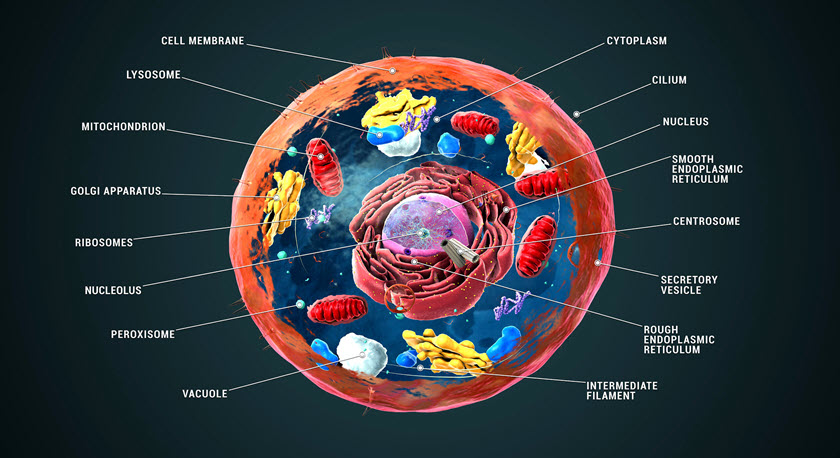
Our well-being is deeply rooted in the health and function of our cells. Each cell is critical in energy production, communication, and repair, shaping everything from metabolism to aging. By understanding how cellular health impacts overall wellness, individuals can make informed lifestyle choices to enhance longevity and vitality. Here’s a concise breakdown of why:
- Cellular Processes: Cells perform essential functions like energy production (via mitochondria), protein synthesis, and waste elimination. Healthy cells ensure these processes run smoothly, supporting organ and system function.
- Nutrient Uptake: Cells rely on proper nutrients (vitamins, minerals, amino acids, etc.) to function. Deficiencies or imbalances can impair cellular health, leading to broader health issues.
- Oxidative Stress and Repair: Cells are constantly exposed to damage from free radicals. Healthy cells have robust antioxidant defenses and repair mechanisms to maintain integrity.
- Communication: Cells communicate through signaling pathways to coordinate bodily functions. Disruptions at the cellular level can lead to systemic problems like inflammation or disease.
- Regeneration: Healthy cells replicate and regenerate tissues, aiding recovery and maintenance of bodily functions.
To support cellular health:
- Nutrition: Eat a balanced diet rich in antioxidants, healthy fats, and micronutrients.
- Hydration: Water supports cellular processes and detoxification.
- Exercise: Promotes circulation, delivering oxygen and nutrients to cells.
- Sleep: Allows cells to repair and regenerate.
- Stress Management: Chronic stress can impair cellular function through hormonal imbalances.
The Building Blocks of Health
Groups of cells with similar structure and function come together as a unit to form tissues, which are categorized into four types: epithelial, connective, muscle, and nervous.
- Epithelial tissue forms protective coverings and linings, facilitates absorption, secretion, filtration, and sensory reception. It serves as a barrier, regulates the exchange of substances, and produces secretions such as mucus or enzymes.
- Connective tissue supports, binds, protects, and insulates other tissues, stores energy, and facilitates transport (e.g., blood). It encompasses diverse types such as bone, cartilage, and blood.
- Muscle tissue facilitates movement, maintains posture, and generates heat. It is responsible for voluntary movements (skeletal), involuntary movements (smooth), and the contraction of the heart (cardiac).
- Nervous tissue transmits electrical and chemical signals, enabling communication, coordination, and control. It also supports sensory input, processing, and motor output.
Tissues form organs, and organs form organ systems. These systems include the circulatory, digestive, endocrine, integumentary, immune, muscular, skeletal, reproductive, respiratory, and hematopoietic systems (which produce the components in blood). Together, these systems create a body composed of proteins and fats, using carbohydrates as fuel.
The Foundation of Cellular Health
Cells serve as the building blocks of life, each containing essential structures that sustain function. The cell membrane regulates the exchange of nutrients and waste, while organelles such as mitochondria produce energy and ribosomes assist with protein synthesis. Effective cellular metabolism ensures that cells transform nutrients into energy, supporting growth and repair. Meanwhile, cell communication through signaling pathways allows the body to coordinate vital processes and respond to environmental changes.
What is Cellular Health?
Cellular health refers to how effectively our cells function overall.
As we age, our cells also age, and their efficiency declines. Our cells become more fragile and less efficient, but processes like autophagy eliminate damaged components, preserving function. This decline in our cells contributes to the aging process, leaving us feeling tired or as if we’re not quite at our best. Chronic stress and inflammation can accelerate cellular aging, hindering the body’s ability to heal and maintain optimal health.
Longevity: The Importance of Cellular Health
As our cells break down, our bodies begin to age. The following explains what is happening at the cellular level as we move toward seniority.
Fragile Cells: As we age, our cells, including our red blood cells, become more fragile and lose some of their function. As a result, we can be at risk for anemia, which can make us feel tired and weak.
Waste Buildup: Our cells begin to lose their ability to remove waste from inside the cell walls efficiently. The buildup of cellular waste creates the opportunity for cells to function abnormally.
Unbalanced Immune System: As our cells age, cell function declines, and cell signaling becomes abnormal. Mixed signaling at the cellular level can cause problems with our immune system and affect our overall health, making us more susceptible to disease.
Slower Metabolism: Our cells help regulate metabolism, keeping glucose and cholesterol healthy. As we age, our cellular response to nutrients can become impaired, affecting our body weight, glucose levels, and lipid (fat) metabolism.
Lifestyle and Cellular Function
Daily habits profoundly influence cellular health. Chronic conditions like diabetes and heart disease often stem from cellular dysfunction. Tackling inflammation, oxidative stress, and metabolic imbalances can lower disease risk and foster long-term wellness. Individuals boost their body’s resilience and overall well-being by focusing on cellular health through balanced nutrition, regular physical activity, and effective stress management.
A nutrient-dense diet provides vital components such as proteins, omega-3 fatty acids, vitamins, and antioxidants, which support cell growth, function, and protection against oxidative damage. Regular exercise enhances metabolism and cellular repair, while effective stress management, such as mindfulness, mitigates harmful effects that contribute to aging.
Conclusion
Cellular health serves as the foundation for overall wellness. Individuals can adopt habits that enhance vitality by understanding how cellular function affects longevity and disease prevention. We can nurture our cells through proper nutrition, exercise, and stress management, ensuring a strong, healthy body for years to come.
The Cell Structure
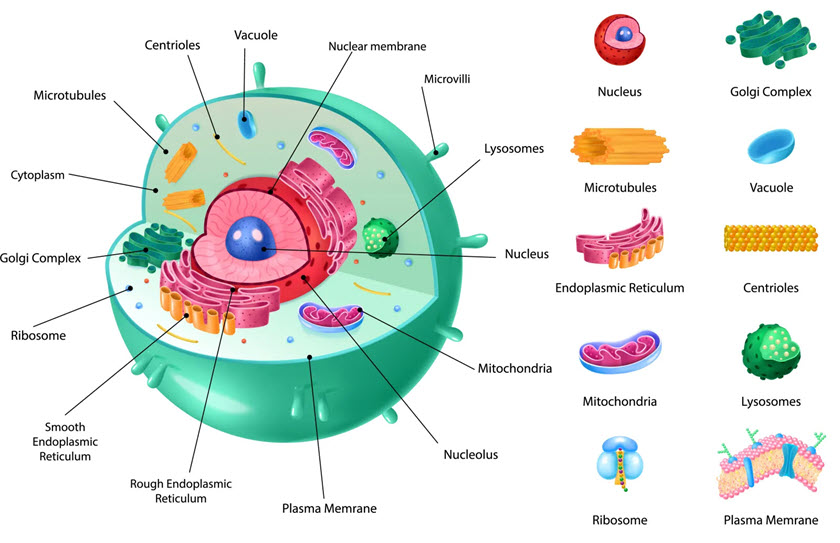
The cell is the smallest unit of life that can function on their own, create their own energy and self-replicate. They carry out various specialized functions such as metabolism, energy production, transportation of nutrients etc. and some of the cell’s most important structures are known as organelles. I want you to really appreciate the cell for all it is, so I’ll give a simple explanation of its structure.
The nucleus is the cell’s headquarters. It houses all the cell’s genetic information. There’s typically one nucleus per cell, but some cells such as the skeletal muscle cells have more than one nucleus. The nucleus protects the cell’s DNA, while controlling all the other cellular activities such as cell growth, division and cell death.
The nuclear membrane is a double layer surrounding the cell’s nucleus, where the chromosomes are located. It separates the chromosomes from the cell’s cytoplasm and other contents. An array of small holes, or pores, in the nuclear membrane allows for the selective passage of certain materials, such as nucleic acids and proteins, between the nucleus and cytoplasm.
Centrioles are paired, barrel-shaped organelles located near the nuclear envelope in the cytoplasm of animal cells. Centrioles play a role in organizing microtubules that serve as the cell’s skeletal system. They help determine the locations of the nucleus and other organelles within the cell.
A lysosome is a membrane-bound cell organelle that contains digestive enzymes. Lysosomes are involved in various cellular processes. They break down excess or worn-out cell components. They may be used to destroy invading viruses and bacteria. If the cell is damaged beyond repair, lysosomes can assist in its self-destruction in a process called programmed cell death, or apoptosis.
The mitochondria are the powerhouses of the cell. They create energy known as adenosine triphosphate, or ATP, which fuels all the other activities of the cell. Mitochondrial DNA is the circular chromosome found inside the cellular organelles called mitochondria. In the cytoplasm, mitochondria are the site of the cell’s energy production and other metabolic functions.
Microtubules are tiny, hollow tubes found in cells. They play a crucial role in the cytoskeleton, which serves as the cell’s internal structure, helping to maintain shape, enabling movement, and aiding in transport within the cell.
The plasma or cell membrane envelopes the cell and separates the interior of the cell from its external environment. This membrane consists of a lipid bilayer, or two walls of fat. And on these walls of fat are the receptors, which are the gatekeepers and communicators of the cell.
The cytoplasm is a jelly-like substance that fills the interior space of the cell. It is composed of water, salts, and various organic molecules. It surrounds and protects the organelles, and many critical reactions, such as protein synthesis, occur in the cytoplasm.
The cytoskeleton helps provide the cell with shape, strength, and an organized structure. It can be compared to a transport network that facilitates various types of movement in the cell. The cytoskeleton helps with cell reproduction, the movement of organelles, the functions of muscles, and intracellular transport between the organelles. It also enables the separation of daughter chromosomes to opposite poles during cell division.
The endoplasmic reticulum processes and transports new materials. Once it processes these new materials, they travel to the Golgi apparatus, which packages and distributes these molecules to the outer cell membrane. They either become part of the cell membrane or leave the cell to perform other functions.
- The endoplasmic reticulum is a network of membranes within a cell that facilitates the movement of proteins and other molecules. Proteins are assembled at organelles known as ribosomes. When proteins are intended to become part of the cell membrane or to be exported from the cell, the ribosomes that assemble them attach to the rough endoplasmic reticulum, which gives it a rough appearance.
- In contrast, the smooth endoplasmic reticulum does not have ribosomes and assists in synthesizing and concentrating various substances the cell requires.
The ribosomes transcribe segments of DNA into RNA, and they read and interpret the RNA to translate it into proteins by assembling amino acid sequences based on the instructions contained in the genetic code.
A Golgi body, also known as a Golgi apparatus, is a cell organelle that helps process and package proteins and lipid molecules, especially proteins destined to be exported from the cell. Named after its discoverer, Camillo Golgi, the Golgi body appears as a series of stacked membranes.
A vacuole is a membrane-bound organelle found in cells. In animal cells, vacuoles are usually small and serve to sequester waste products. In plant cells, they help maintain water balance. At times, a single vacuole can occupy most of the internal space of the plant cell.
References
Dr. Leona. “Healing Begins at the Cellular Level, and Healthy Cells Become Strong Functioning Bodies.” 2022. Dr. Leona. December 8. https://drleona.com/blog/2022/12/06/healing-begins-at-the-cellular-level-and-healthy-cells-become-strong-functioning-bodies/.
We consist of approximately 50 trillion cells, which are the building blocks of our bodies. Our cells construct our tissues, which form our organs, and our organs create our organ systems, which work together to keep us alive. If you’re not healing at the cellular level, your cells cannot function. And if your cells cannot function, your tissues can’t function. If your tissues can’t function, your organs can’t function. And when your organs can’t function, you are dealing with disease; that’s why getting healthy revolves around getting your body to function the way it’s designed. This involves understanding how healing begins at the cellular level.
Wnorowski, Thomas. “Foundational Health: The Importance of Cellular Health.” 2025. BodyBio. Accessed June 3. https://bodybio.com/blogs/blog/what-you-need-to-know-about-cellular-health.
Key Takeaways:
1. Cellular Health is essential to unlocking longevity as we age, as cellular health monitors how well our cells function.
2. As we age, our bodies undergo the following: cells become more fragile, cell waste builds up, the immune system becomes unbalanced, and our metabolism slows.
3. The skin of our cells is comprised of phospholipids, which are necessary for the nervous and cardiovascular systems to function and remain intact.
4. Phosphatidylcholine [#] is the most abundant of the four phospholipids [‡] that predominate in the membrane and is the most critical structural and functional element in the membrane.
5. Fats, when incorporated into phospholipids, strongly influence membrane properties, including fluidity, flexibility, permeability, and the activities of membrane-bound enzymes and cell-signaling pathways.
Additional Reading
Banta, Sara. “Cellular Health 101 : How To Boost Cellular Health.” 2025. Sara Banta Health. February 13. https://sarabantahealth.com/cellular-health-101/.
When we think about health, we often focus on major organs like the heart or liver, or perhaps on systems like the immune system. However, the true foundation of our well-being lies within our cells. Each cell in the body functions like a tiny, bustling city that generates energy, maintains a boundary, manages waste, communicates, and performs tasks that influence our overall health. When cells are thriving, we thrive too. But our energy, resilience, and vitality suffer when they are under attack or lack essential resources. Let’s explore cellular health, the role of ATP and mitochondria, the importance of cell membranes, and how toxins can derail the system.
Boland, Joe. “How to Improve Cellular Health and Why It’s Important.” 2025. Dr. Axe. April 1. https://draxe.com/health/cellular-health/.
Cellular health is the foundation of overall wellness. Every function in the body, from energy production to immune response, depends on the health of our cells. When our cells function optimally, we experience vitality, mental clarity and a reduced risk of disease. When they don’t, health issues arise.
“Provider Perspectives: What Is ‘Cellular Health’ and Why Is It Important?” 2022. Essential Health. November 18. https://essentialhealth.health/provider-perspectives-what-is-cellular-health-and-why-is-it-important/.
The term “cellular health” refers to maintaining a healthy, optimally functioning body down to each individual cell. This encompasses mitochondrial function, oxygen transport, cell membrane health, and proper clearance of cellular waste, among other factors. To achieve our fullest potential and prevent or recover from disease, we must address both the health and dysfunction of our fundamental building blocks: our cells.
Rao, Neelesh. “Understanding Cellular Health: Foundations and Implications.” 2025. LabVerra. Accessed June 3. https://labverra.com/articles/understanding-cellular-health-implications/.
Cellular health is not just a passing trend in the wellness field; it is a vital piece of the puzzle that contributes to our overall well-being. Every moment, the cells in our bodies engage in a symphony of processes that sustain our existence. This article provides a comprehensive guide to understanding this essential aspect of health. By dissecting the structures, functions, and interactions of cells, we can better appreciate their impact on our vitality and longevity. Recent studies have clarified how microscopic elements significantly influence our health outcomes as we explore cellular health.
Richardson, Jenna. “Optimum Health Starts at the Cellular Level.” 2023. Princeton Integrative Health. March 29. https://blog.princetonih.com/blog/optimum-health-starts-at-the-cellular-level.
Aging is a natural process that usually involves biochemical and physiological changes that disrupt normal cellular functions. Maintaining optimal cellular function is critical for supporting overall health, quality of life, and well-being into older age. As we grow older, we often focus on external factors in the fight against aging, such as finding the right hairstyle or clothing. This response is perfectly normal, but what truly fosters the vitality and energy of youth comes from within. Cellular health affects our energy, appearance, strength, digestion, and much more. While aging is inevitable, optimizing cellular health can positively influence a healthy aging process, energy levels, and quality of life along the way.
Sapkota, Anupama, Faith Mokobi, Babita Sharma, and Tek Raj Ojha. 2025. “Cell Biology Notes.” Microbe Notes. April 9. https://microbenotes.com/category/cell-biology/.
Cell biology or cytology is a branch of biology that deals with studies related to the structure and function of a cell-based on the concept that the cell is the fundamental unit of life.
“What Is Cellular Health: Your Health Depends on Your Cells.” 2024. MitoQ. August 5. https://www.mitoq.com/journal/what-is-cellular-health.
“Talking Glossary of Genomic and Genetic Terms.” 2025. Talking Glossary of Genetic Terms | NHGRI. Accessed June 3. https://www.genome.gov/genetics-glossary.
Good health encompasses a broad range of discussions and approaches individuals adopt. Diet and exercise can differ significantly among people, with many diets and types of workouts available. Some may believe the Mediterranean diet and yoga hold the keys to a long and healthy life, while others might firmly support keto and weightlifting. Although there seems to be an endless array of combinations, the effectiveness of these actions ultimately depends on how they affect your body at a cellular level. While the common aspiration of living a long, healthy, and fulfilling life is shared by each method, they often overlook the specific impacts on your body at a cellular level. Cellular health emphasizes the importance of the cells within your body and how to support them. Let’s examine the fundamental levels of organization in the human body, as maintaining cellular health can enhance your overall health and well-being.
Notes
[*] Phosphatidylcholine is a chemical that naturally occurs in foods such as eggs, red meat, and whole grains. It’s also used as a supplement for improving mental function, dissolving gallstones, and more.
[‡] Phospholipids serve as building blocks for cell membranes, gatekeepers of cellular activities, and even contribute to brain and heart health.
The featured image on this page is from the Freedom Health Systems website.
 Salubrious Sounds