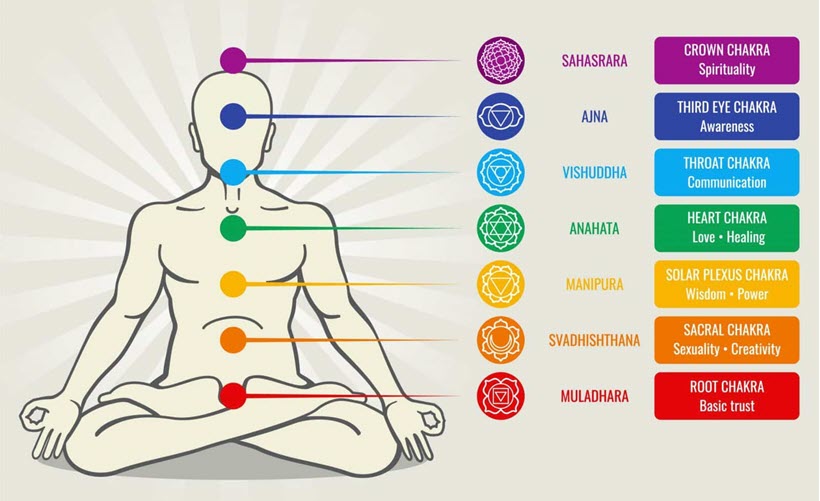
Chakra points are energy centers in the human body. In Sanskrit, ‘chakra’ means ‘wheel,’ and the precise definition of chakra is “a wheel of spinning energy,” a swirling vortex functioning as a powerhouse of energy. There are 114 chakras in the human body, through which energies flow. However, the main seven chakra points are more recognized among yoga practitioners, and each has its unique quality.
Chakra is essential because even a blockage at one point can lead to illness. One must understand and analyze the function of the Seven Chakras and the necessary steps to keep energy flowing. Each chakra is governed by spiritual laws and principles of consciousness, which can be used to build a positive life.
Identifying an imbalance in your chakras often involves paying attention to physical, emotional, and mental symptoms. Here are some common signs associated with each chakra:
1. The Base/Root Chakra – Muladhara Chakra
The Muladhara chakra, or Root Chakra, is located at the base of your spine in the tailbone area (perineum). This chakra is associated with the Earth element, which contributes to a very active personality. This chakra represents grounding, stability, and security.
- Colour: Red
- Association: It’s associated with earth and is related to earthly grounding and surviving physically.
- Purpose: It controls fight response and financial independence.
- Blockage implication: Depression, fear, procrastination, cold feet, paranoia, defensiveness.
- Symptoms: Feelings of insecurity, anxiety, or fear; financial stress; issues with legs, feet, or lower back.
- Glands: Gonads
2. Sacral Chakra – Swadhishthana Chakra
The Swadhisthana Chakra, also known as the Sacral Chakra, is situated between the base of the spine and the navel (lower abdomen). It is associated with the water element and encompasses issues related to sexuality on an emotional level, as well as the right to feel and desire. This chakra is associated with creativity, sexuality, and emotional expression.
- Colour: Orange
- Association: Circulatory System, lower abdomen, bladder, reproductive organs, glands, kidneys
- Purpose: It displays desire, sexuality, pleasure, creativity, and procreation
- Blockage implication: Eating disorder, sexual guilt, compulsive behavior, emotional problems, impotence.
- Symptoms: Emotional instability, lack of creativity, problems with intimacy, or issues with the reproductive system.
- Glands: Reproductive organs
3. Solar Plexus Chakra – Manipura Chakra
Manipura, or Solar Plexus Chakra, is a few inches above the navel in the upper abdomen. This chakra relates to personal power, confidence, and willpower.
- Colour: Yellow
- Association: Digestive system, muscles, pancreas, adrenals.
- Purpose: It represents emotional stability and a feeling of confidence. The chakra also coordinates for joy, laughter, aggression, and power.
- Blockage implication: Anger, Feeling of revenge, lack of direction, frustration, nervousness, ulcer, constipation.
- Symptoms: Low self-esteem, difficulty making decisions, feeling powerless, or digestive issues.
- Glands: Digestive system and adrenal glands
4. Heart Chakra – Anahata Chakra
Anahata, or the Heart Chakra, is one of the seven essential centers. It is located in the center of the chest, where the “soul” resides. This chakra symbolizes love, compassion, and connection to others.
- Colour: Green
- Association: Compassion, love, joy, harmony, inner peace.
- Purpose: The chakra point is considered the “heart of the soul.” People derive a feeling of love through the Heart Chakra, and the feeling of unconditional love proceeds to the solar plexus chakra. Even after that, it passes to a sexual spot where the feelings are released.
- Blockage implication: Heart problems, Stoic, Lung problems, weak immune system, heart cancer, breast cancer, blood pressure, passivity, inhumanity.
- Symptoms: Difficulty with relationships, feelings of isolation or anger, or heart and lung issues.
- Glands: Thymus and lymph
5. Throat Chakra – Vishuddha Chakra
The Vishuddha Chakra, also known as the Throat Chakra, is in the throat. When it is active, you become more expressive and experience growth in your creative side. This chakra is linked to communication, self-expression, and truth.
- Colour: Blue or Turquoise
- Association: Communication, creativity, self-expression, truth, justice.
- Purpose: Senses of outer and inner hearing, self-healing, innovation, transformation, purification.
- Blockage implication: Writer’s block, creativity block, fever, communication problems, infection, thyroid imbalances, neck problems, hormonal disorders such as PMS, mood swings, menopause, and bloating.
- Symptoms: Communication problems, fear of speaking out, sore throat, or thyroid issues.
- Glands: Jaws, teeth, throat, and other mouth glands
6. Third Eye or Brow Chakra – Ajna Chakra
The Ajna Chakra, also known as the Third Eye or Brow Chakra, is perhaps the most recognized of the seven chakras, especially in the West. According to yoga philosophy, the Ajna Chakra, or Third Eye, is associated with knowledge and wisdom. Positioned between the eyebrows, it symbolizes intuition, insight, and spiritual awareness.
Ajna Chakra is located in the Center of the forehead at the eye level or between the eyebrows.
- Colour: Indigo (a combination of red and blue)
- Association: Question, perception, knowing, inner vision, intuition, imagination, wisdom, ability to think, decision making.
- Purpose: The chakra is for finding answers to the spiritual aspect of human life on earth and beyond.
- Blockage implications can lead to problems like lack of foresight, thyroid imbalances, mental rigidity, ‘selective’ memory, depression, fevers, flu, infections, hyperactivity, learning disabilities, and sleeping disorders.
- Symptoms: Lack of intuition, difficulty concentrating, headaches, or vision problems.
- Glands: Pineal
7. Crown Chakra – Sahasrara Chakra
The Sahasrara Chakra, the Crown Chakra, is the highest of the seven chakras. It is situated at the top of the head and is associated with the cerebral cortex, central nervous system, and pituitary gland. This chakra symbolizes spiritual connection and enlightenment.
- Colour: Violet or White
- Association: Information, understanding, acceptance, bliss, inner and outer beauty.
- Purpose: The chakra is considered to be the point of connection with God and is used for divine purposes and spiritual destiny.
- Blockage Implication: This can lead to psychological problems like headaches, mental.illness, neuralgia, senility, photosensitivity, coordination problems, epilepsy, varicose veins, and blood vessel problems.
- Symptoms: Lack of spiritual connection, feelings of disconnection, or chronic fatigue.
- Glands: Hypothalamus and pituitary gland
General Signs of Imbalance
- Physical Symptoms: Frequent illnesses or chronic pain.
- Emotional Symptoms: Mood swings, anxiety, or depression.
- Behavioral Symptoms: Difficulty in relationships, lack of motivation, or avoidance of responsibilities.
Self-Assessment
- Meditation and Reflection: Spend time in meditation, focusing on each chakra and observing how you feel.
- Journaling: Write down your thoughts and feelings, noting any recurring issues related to the chakras.
- Energy Work: Practices like yoga, Reiki, or acupuncture can help you assess and balance your chakras.
Connection Between Chakras and Solex Frequencies
The connection between chakras and Solex frequencies lies in the concept of vibrational energy and healing. Solex frequencies are a set of specific sound frequencies that are believed to resonate with the body’s energy systems, including the chakras. Here’s how they relate:
1. Vibrational Healing
- Both chakras and Solex frequencies operate on the principle that everything has a vibrational frequency. The idea is that these frequencies can influence the energy flow within the body.
2. Resonance with Chakras
- Each chakra is thought to correspond to a specific frequency. Solex frequencies aim to harmonize or balance these energy centers by providing a sound vibration that resonates with each chakra.
3. Energy Alignment
- Using Solex frequencies during meditation or sound therapy may help align and balance the chakras, promoting overall well-being. This practice can enhance emotional, physical, and spiritual health.
4. Therapeutic Use
- Practitioners may use Solex frequencies in conjunction with chakra healing techniques, such as yoga or guided meditations, to deepen the therapeutic effects and facilitate energy flow.
5. Holistic Approach
- The integration of sound frequencies with chakra work emphasizes a holistic approach to healing, addressing the mind, body, and spirit through vibrational therapy.
Solex frequencies are used as a tool to help balance and harmonize the chakras by leveraging the power of sound and vibration, enhancing overall energy flow and well-being.
Drishith. 2023. “7 Chakra Points in Body and Their Significance Unblock Them.” VedicFeed. October 4. https://vedicfeed.com/7-chakra-points-in-human-body/.
“Solex, LLC.” 2025. Facebook. Accessed March 16. https://www.facebook.com/profile.php?id=100063657531410.
 Salubrious Sounds