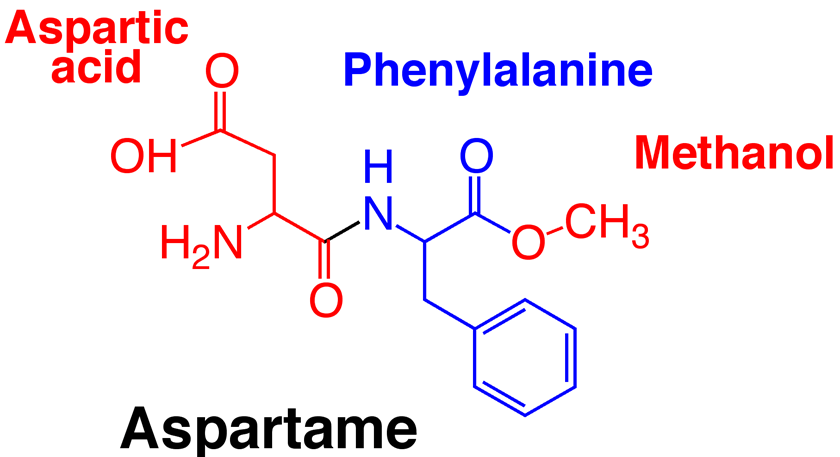
Beware of the following statement!
Aspartame was once listed by the Pentagon as a biological warfare chemical? Yet today, it’s marketed as a “safe” artificial sweetener in diet sodas and processed foods. How did something with such a dangerous past suddenly become an approved food additive? Makes you wonder who’s really looking out for our health…
There’s no credible evidence to support the claim that aspartame was ever listed by the Pentagon as a biological warfare chemical. This idea seems to stem from misinformation or conspiracy theories that have circulated online for years. Aspartame, a widely used artificial sweetener, was discovered in 1965 by a chemist named James Schlatter and approved by the FDA for use in the early 1980s after extensive safety testing.
The rumor likely originates from confusion or deliberate misrepresentation of its regulatory history, combined with distrust in artificial additives. Some point to a 1990s hoax document called the “Nancy Markle letter,” which falsely linked aspartame to various health issues and claimed it had a shady past, including military connections. However, no official Pentagon records or credible historical documents substantiate this.
The Nancy Markle Letter
The Nancy Markle letter is a notorious hoax email that began circulating on the internet in the late 1990s, falsely attributed to a person named “Nancy Markle.” It claimed to summarize a lecture from a supposed “World Environmental Conference” and warned that the artificial sweetener aspartame was responsible for a wide range of serious health issues, including multiple sclerosis, lupus, methanol toxicity, blindness, seizures, depression, memory loss, birth defects, and even death. The letter also alleged a conspiracy between the FDA and aspartame manufacturers, suggesting the sweetener’s approval was tainted and its dangers were being covered up.
In reality, the letter was not written by a “Nancy Markle”—no such person has been credibly linked to it. It’s widely believed to have been authored by Betty Martini, an anti-aspartame activist, who used the pseudonym to spread her claims. The email gained traction during the early days of internet chain letters, becoming a canonical example of online misinformation. It was so pervasive that it was later featured in discussions about urban legends and tutorials on evaluating web credibility, like one from the Media Awareness Network.
The claims in the letter lack scientific backing and contradict extensive research, including reviews by the FDA, the European Food Safety Authority, and the World Health Organization, which have found aspartame safe for consumption within established limits. The hoax capitalized on public distrust of artificial additives and the nascent internet’s ability to amplify unverified information, making it a lingering myth despite being debunked.
References
American Psychological Association. 2025. Artificial Sweeteners Linked to Weight Gain. Accessed March 26. https://www.purdue.edu/uns/x/2008a/080211SwithersAPA.html.
“Aspartame Controversy.” 2025. Wikipedia. Wikimedia Foundation. March 25. https://en.wikipedia.org/wiki/Aspartame_controversy.
Escherf, Kat. 2023. “The Decades-Long Struggle to Figure Out Whether Aspartame Is Bad for You.” Smithsonian.Com. Smithsonian Institution. January 27. https://www.smithsonianmag.com/smart-news/decades-long-struggle-figure-out-whether-aspartame-bad-you-180961880/.
Before you decide to believe or, worse, forward an e-mail with serious health claims, do a little checking. Start on the Web with urbanlegends.miningco.com which catalogues the more persistent rumors. Then go to reliable health sites, like mayohealth.org (for general health), www.medhelp.org (especially good for cardiology), www.oncolink.org or cancernet.nci.nih.gov (for cancer) or www.navigator.tufts.edu (for nutrition). Otherwise, you might get caught in a web of confusion.
Gorman, Christine. 1999. “A Web of Deceit.” Time. Time. February 8. https://time.com/archive/6734551/a-web-of-deceit/.
Why would a sugar substitute backfire? Swithers and Davidson wrote that sweet foods provide a “salient orosensory stimulus” that strongly predicts someone is about to take in a lot of calories. Ingestive and digestive reflexes gear up for that intake but when false sweetness isn’t followed by lots of calories, the system gets confused. Thus, people may eat more or expend less energy than they otherwise would.
Grok. 2025. Accessed March 26. https://grok.com/chat/fac6aea1-4ea8-47d8-95bf-483b2b1942e5.
Running, Cordelia, and Richard D. Mattes. “A Review of the Evidence Supporting the Taste of Non‐esterified Fatty Acids in Humans” 2016. Purdue University. https://docs.lib.purdue.edu/cgi/viewcontent.cgi?article=1023&context=foodscipubs.
Fat replacers have been developed largely to mimic the somatosensory properties of fats. There has been less effort directed at replacing their chemosensory contributions to foods. Though there are no relevant data to-date, it is possible the acceptability of fat replacers would be improved by capturing their full contribution to the flavor profile of foods and beverages.
Swithers, Susan E., Ph.D. “Prof: Diet Drinks Are Not the Sweet Solution to Fight Obesity, Health Problems.” 2013. Purdue University. July 11. https://www.purdue.edu/newsroom/archive/releases/2013/Q3/prof-diet-drinks-are-not-the-sweet-solution-to-fight-obesity,-health-problems.html.
As the negative impact of consuming sugar-sweetened beverages on weight and other health outcomes has been increasingly recognized, many people have turned to high-intensity sweeteners like aspartame, sucralose and saccharin as way to reduce risk of these consequences. However, accumulating evidence suggests that frequent consumers of these sugar substitutes may also be at increased risk for excessive weight gain, metabolic syndrome, Type 2 diabetes (T2D) and cardiovascular disease. This paper reviews these findings and considers the hypothesis that consuming sweet-tasting, but non-caloric or reduced-calorie food and beverages, interferes with learned responses that normally contribute to glucose and energy homeostasis. Because of this interference, frequent consumption of high-intensity sweeteners may have the counterintuitive effect of inducing metabolic derangements.
 Salubrious Sounds