Contents
The 12 Main Meridians
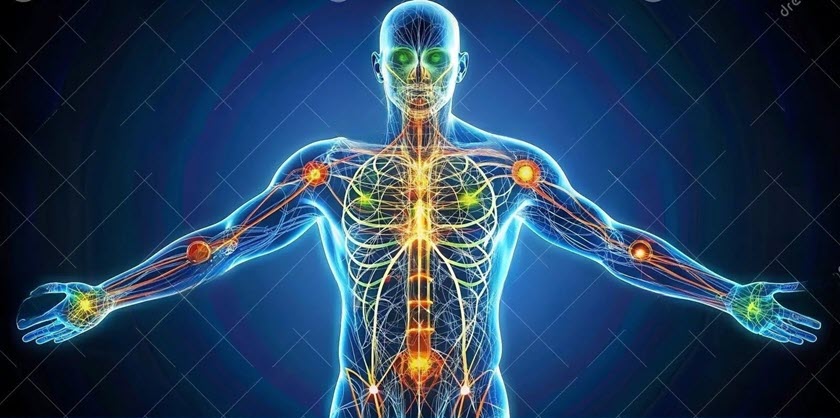
Traditional Chinese medicine believes that energy (also referred to as qi) flows throughout the body like blood. When this flow of energy becomes disrupted, symptoms and disease can occur. Acupuncture and other forms of Eastern medicine work to restore the flow of energy throughout the body using the meridian system.
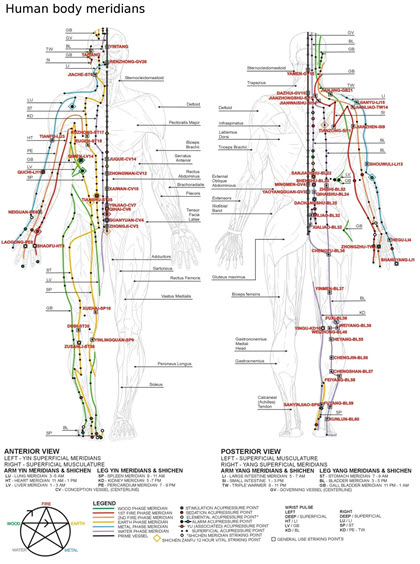
Meridians are channels that direct the flow of energy through specific pathways in the body. Think of them as a superhighway that the energy in your body uses to move throughout your organ systems. Visualize a body divided in half from top to bottom. Each side of the body contains six meridians: three yin and three yang. Here are the 12 major meridians of the body and the functions they perform. Each meridian is assigned to what can be called a circuit, known as an element. There are five elements: Water, Wood, Fire, Earth, and Metal. Here is how those five elements function within the meridian system.
- Earth: Stomach and spleen meridian.
- Fire: Heart and small intestine meridian, circulation and three-fold warming meridian.
- Metal: Lung and colon meridian.
- Water: Kidney and bladder meridian.
- Wood: Liver and gallbladder meridian.
Small Intestine Meridian
Element: Fire
Function: This meridian is responsible for separating pure from impure substances after digestion. It helps regulate digestion, absorption, and elimination.
Pathway: Runs from the hand, through the shoulder, and into the small intestine.
Signs of Imbalance: Abdominal pain or bloating, poor digestion, difficulty absorbing nutrients, indecisiveness, foggy thinking, or issues along the meridian pathway like shoulder or neck pain
Stomach Meridian
Element: Earth
Function: Governs digestion and nourishment. It regulates the intake of food and fluids and the transformation of nutrients into energy.
Pathway: Begins at the head, moves down through the face and neck, and travels down the chest to the stomach.
Signs of Imbalance: Digestive issues like acid reflux, indigestion, nausea, or excessive appetite; worry or anxiety (the emotion associated with Earth); issues along the meridian pathway like frontal headaches or knee pain.
Spleen Meridian
Element: Earth
Function: Associated with digestion, blood production, and immune functions. It helps in the transformation and transportation of nutrients.
Pathway: Starts at the foot, travels up the inner leg to the spleen and stomach.
Signs of Imbalance: Fatigue, sluggishness, bloating after eating, loose stools, poor appetite, easy bruising, tendency to worry or overthink, dampness accumulation (e.g., edema).
Lung Meridian
Element: Metal
Function: Controls respiration, the intake of oxygen, and the excretion of carbon dioxide. It also regulates skin health and immune defense.
Pathway: Starts in the chest, runs through the arm to the thumb.
Signs of Imbalance: Respiratory conditions (cough, shortness of breath, asthma), frequent colds or flu, skin issues (like dryness or eczema), feelings of grief or sadness, a weakened voice.
Heart Meridian
Element: Fire
Function: The heart meridian governs emotional well-being and blood circulation. It controls the rhythm and strength of the heartbeat.
Pathway: Runs from the heart through the arm to the small finger.
Signs of Imbalance: Palpitations, shortness of breath, chest discomfort, insomnia, anxiety, restlessness, poor memory, excessive or lack of joy, speech problems.
Bladder Meridian
Element: Water
Function: Associated with the storage and excretion of fluids. It also influences the nervous system and stress response.
Pathway: Begins at the head, moves down the spine, and travels to the feet.
Signs of Imbalance: Urinary issues (frequency, urgency, difficulty), lower back pain, stiffness along the spine, headaches (especially at the back of the head), fear, or difficulty adapting to change.
Kidney Meridian
Element: Water
Function: Controls the production of energy and stores essential life force. It governs growth, reproduction, and aging.
Pathway: Starts at the feet and travels up the inner leg to the kidneys.
Signs of Imbalance: Chronic fatigue, developmental issues, premature aging, reproductive challenges, bone problems (like osteoporosis), hearing loss or tinnitus, excessive fear or insecurity, lower back weakness.
Liver Meridian
Element: Wood
Function: Regulates the smooth flow of qi, detoxification, and the storage of blood. It affects emotional health and decision-making.
Pathway: Begins at the foot, moves up the inner leg to the liver.
Signs of Imbalance: Irritability, anger, frustration, stress, mood swings, menstrual irregularities, digestive issues (especially after fatty foods), eye problems (blurry vision, dry eyes), tension headaches, tight muscles.
Large Intestine Meridian
Element: Metal
Function: Manages waste elimination and supports immune defense. It works in conjunction with the lungs to regulate water metabolism.
Pathway: Travels from the hand, through the arm, to the large intestine.
Signs of Imbalance: Constipation or diarrhea, abdominal pain, skin issues (like acne or rashes, especially on the face/shoulders), sinus problems, difficulty releasing emotions or past experiences.
Pericardium Meridian
Element: Fire
Function: Protects the heart and governs emotional stability. It plays
a role in balancing the body’s blood circulation.
Pathway: Runs from the chest through the arm to the middle finger.
Signs of Imbalance: Anxiety, nervousness, palpitations (especially
related to emotional upset), chest tightness or discomfort, difficulty
with intimacy or forming close relationships, sleep disturbances.
Triple Warmer Meridian
Element: Fire
Function: Regulates the body’s metabolism and controls the distribution of qi and fluids in the body. It’s connected to the immune and endocrine systems.
Pathway: Starts at the hand, travels up the arm, and reaches the head.
Signs of Imbalance: Issues with temperature regulation (feeling too hot or cold), fluid metabolism issues (swelling or dryness), immune system imbalances, hormonal fluctuations, ear problems, or general feelings of being “out of sync.”
Gallbladder Meridian
Element: Wood
Function: Responsible for decision-making, courage, and the smooth flow of bile and digestion. It also helps regulate emotional health.
Pathway: Begins at the head, moves down the side of the body, and ends at the foot.
Signs of Imbalance: Indecisiveness, timidity, irritability, digestive issues (especially with fatty foods, bloating, gas), headaches (often on the side of the head or temples), pain or stiffness along the sides of the body, gallstones.
The Meridian Clock
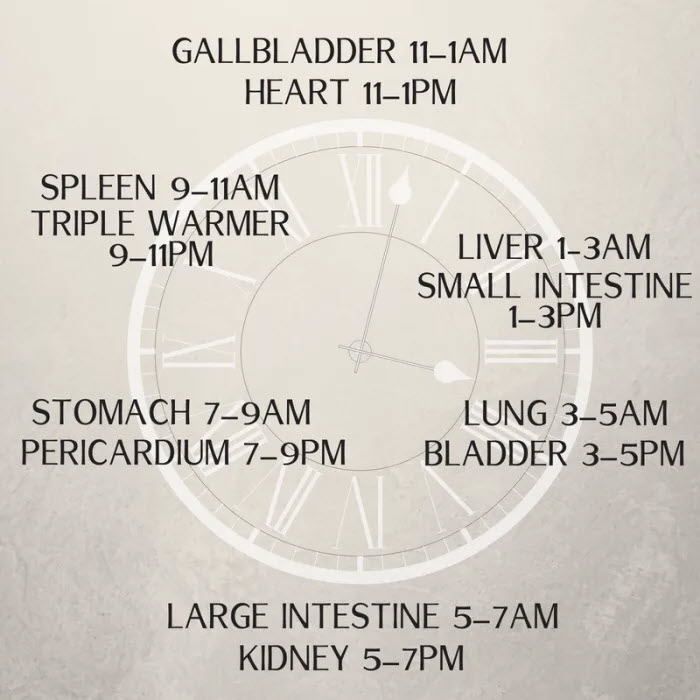
The Meridian Clock, also called the Chinese Body Clock, is a tool used to understand the flow of Qi (Chi) throughout the 12 meridians in the body. Qi is believed to circulate along these 12 primary meridians. According to Traditional Chinese Medicine (TCM), each meridian has a two-hour window during the day when it is most active, and Qi reaches its peak in that specific meridian. During this time, the related organ also functions at its highest level. This cycle repeats every 24 hours.
For example, the Lung Meridian is most active between 3-5 am. This is when the lungs are said to be working at their optimal capacity, replenishing the body with fresh oxygen. Conversely, it is also the time when lung-related issues, such as asthma or cough, may be exacerbated.
Meridians and Chakras
Chakras and meridians are concepts from different spiritual and healing traditions, primarily rooted in Indian and Chinese systems, respectively, but they share some conceptual overlap in how they describe energy flow in the body. Here’s a concise explanation of their relationship:
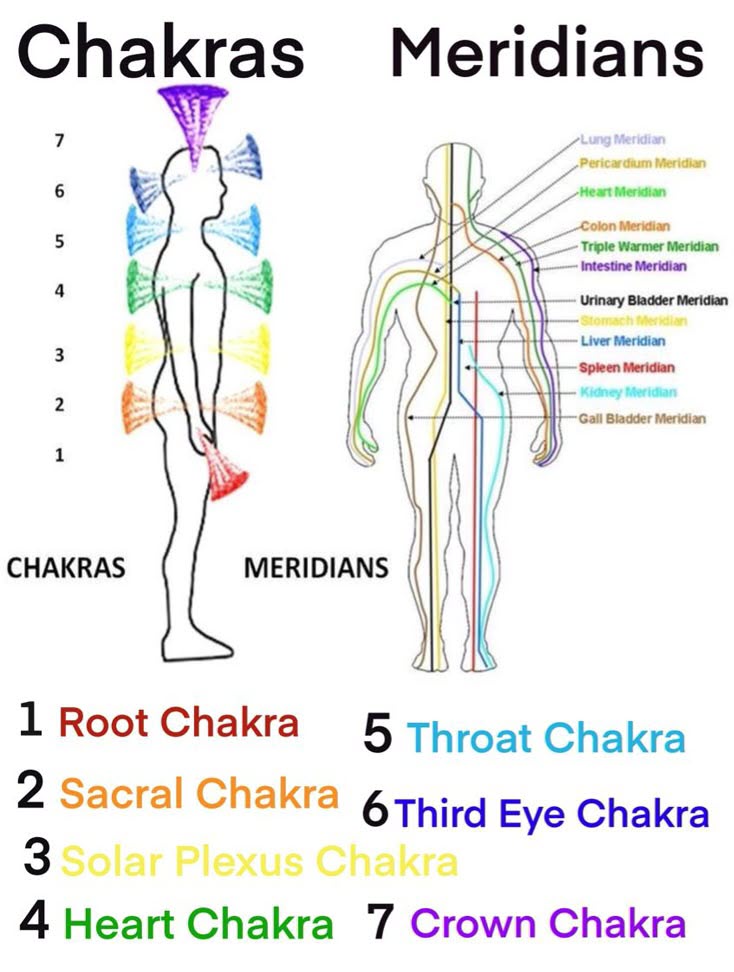
Chakras are energy centers in the body, originating from Indian traditions like yoga and Ayurveda. There are seven main chakras aligned along the spine, from the base to the crown of the head, each associated with specific physical, emotional, and spiritual functions. They act as hubs that regulate the flow of prana (life energy).
Meridians, from Traditional Chinese Medicine (TCM), are pathways through which qi (vital energy) flows, connecting organs and systems. There are 12 primary meridians, each linked to specific organs (e.g., liver, heart) and functions, forming a network that circulates energy throughout the body.
Shared Points
Some acupuncture points along meridians correspond closely to chakra locations. For instance, the heart chakra (near the chest) aligns with points on the heart and pericardium meridians, and the third eye chakra (forehead) relates to points like the “Yintang” point in TCM.
Energy Flow
Both systems describe an invisible energy network in the body. Chakras are like major energy hubs, while meridians are the channels or pathways connecting these hubs to the rest of the body. Think of chakras as power stations and meridians as the wiring that distributes energy.
Interconnected Systems
In holistic practices, chakras and meridians are often seen as complementary. For example, blockages in a chakra (e.g., the heart chakra) might disrupt energy flow in related meridians (e.g., the heart or lung meridians), leading to physical or emotional imbalances.
Holistic Healing
Practices like acupuncture, acupressure, or yoga often integrate both concepts. Stimulating meridian points can influence chakra energy, and balancing chakras through meditation or energy work can enhance meridian flow.
References
“Acupuncture Meridians.” 2025. Acupuncture Meridian Point Locations. Accessed June 24. https://www.acupunctureproducts.com/acupuncture_meridians.html.
“Explain how chakras and meridians are related.” 2025. Grok. Accessed June 24. https://grok.com/share/bGVnYWN5_78063771-3527-458b-baf0-8ac42cbcaaab.
M.B., Brandon, and Halimah Khan. 2023. “12 Meridians: Our Body’s Energy Channels (with Chart).” WE FREE SPIRITS. October 20. https://wefreespirits.com/12-meridians-energy-channels-chart/.
“The 12 Meridians of the Body Explained.” 2025. Acupuncture Therapeutics. Accessed June 23. https://acupuncturetherapeutics.com/the-12-meridians-of-the-body-explained/.
“The Body Meridians – An Energy Map.” 2025. Natural Health Zone. Accessed June 24. https://www.natural-health-zone.com/body-meridians.html.
The Tapping Solution, LLC. 2024. The Tapping Solution (EFT): Who Would You Be Without the Stress? https://www.thetappingsolution.com/.
Additional Reading
“Chinese Meridian Theory Dubai: Dr Roze Biohealth Clinic.” 2022. ROZE BioHealth and BioDental Clinics. June 23. https://drroze.com/chinese-meridian-theory/#!/meridian.
In Traditional Chinese Medicine, a meridian is a channel through which qi, or energy, and the other fundamental substances flow. Meridians are also known as acupuncture meridians and energy vessels. The meridians function as a network, much like a highway system, that can be mapped out throughout the entire body. Meridians, unlike systems of Western medicine (circulatory and nervous systems, for example) are not physical entities.
 Salubrious Sounds