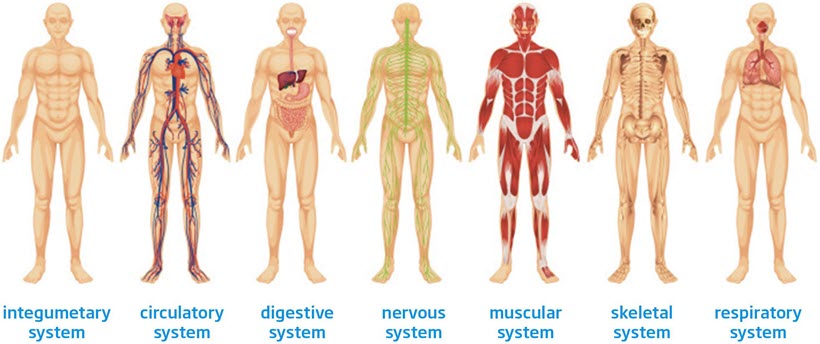
The human body is a complex machine made up of several interconnected systems, each with specific functions that keep us alive and thriving, comprising amongst others the circulatory, digestive, nervous, integumentary, muscular, skeletal and respiratory systems. Each has its own purpose and function and yet when combined, they produce for the body qualities not present in any of the individual elements. Conversely, if any individual system is compromised or a part of the body is damaged, the overall function may be significantly or terminally impaired.
Here’s a rundown of the major body systems and what they do.
Nervous System
- Function: Acts as the body’s control center and communication network. It processes information, coordinates actions, and enables thinking, learning, and memory.
- Key Parts: Brain, spinal cord, nerves.
Circulatory (Cardiovascular) System
- Function: Transports oxygen, nutrients, hormones, and waste products throughout the body via blood. It also helps regulate body temperature and pH.
- Key Parts: Heart, blood vessels (arteries, veins, capillaries), blood.
Respiratory System
- Function: Facilitates breathing by taking in oxygen and expelling carbon dioxide, supporting cellular respiration.
- Key Parts: Lungs, trachea, diaphragm, nasal passages.
Digestive System
- Function: Breaks down food into nutrients the body can absorb, provides energy, and eliminates waste.
- Key Parts: Mouth, esophagus, stomach, intestines, liver, pancreas.
Muscular System
- Function: Enables movement, maintains posture, and produces heat. It works closely with the skeletal system.
- Key Parts: Skeletal muscles, smooth muscles (in organs), cardiac muscle (heart).
Skeletal System
- Function: Provides structure and support, protects organs, anchors muscles, and stores minerals like calcium. It also produces blood cells in bone marrow.
- Key Parts: Bones, cartilage, ligaments, joints.
Endocrine System
- Function: Regulates bodily functions through hormones, influencing growth, metabolism, reproduction, and mood.
- Key Parts: Glands (e.g., pituitary, thyroid, adrenals, pancreas).
Immune System
- Function: Defends against pathogens (bacteria, viruses, etc.) and removes damaged cells to maintain health.
- Key Parts: White blood cells, lymph nodes, spleen, thymus.
Lymphatic System
- Function: Supports immunity by transporting lymph (fluid with immune cells), draining excess fluids, and absorbing fats from the digestive system.
- Key Parts: Lymph vessels, lymph nodes, spleen.
Urinary (Excretory) System
- Function: Filters blood to remove waste and excess substances, regulates water and electrolyte balance, and produces urine.
- Key Parts: Kidneys, ureters, bladder, urethra.
Integumentary System
- Function: Protects the body from external damage, regulates temperature, and senses the environment (touch, pain, etc.).
- Key Parts: Skin, hair, nails, sweat glands.
Reproductive System
- Function: Enables reproduction and, in some cases, produces sex hormones that influence other systems.
- Key Parts: Male (testes, penis); Female (ovaries, uterus, vagina).
These systems don’t work in isolation—they’re deeply interconnected. For example, the respiratory and circulatory systems team up to deliver oxygen to your cells, while the nervous and endocrine systems collaborate to manage stress responses.
References
Grok. “What are the different body systems and their function?” 2025. Grok. Accessed March 28. https://grok.com/share/bGVnYWN5_32d3b49b-704b-404f-aca6-ce4337e60924.
“Section 3 – Defining a Systems Approach – Engineering Better Care.” 2025. ROYAL ACADEMY OF ENGINEERING. Accessed March 28. https://reports.raeng.org.uk/engineering-better-care/section-3-defining-a-systems-approach.html.
The featured image on this page is from the ROYAL ACADEMY OF ENGINEERING website.
 Salubrious Sounds