The immune system is a complex network of cells, tissues, and organs that work together to defend the body against harmful invaders like bacteria, viruses, fungi, and parasites. Here’s a breakdown of its main components:
- White Blood Cells (Leukocytes)
- The key players in the immune response. They’re produced in the bone marrow and circulate in the blood and lymphatic system.
- Types:
- Phagocytes (e.g., neutrophils, macrophages): Engulf and destroy pathogens.
- Lymphocytes:
- B cells: Produce antibodies to neutralize specific invaders.
- T cells: Include helper T cells (coordinate immune response), killer T cells (attack infected cells), and regulatory T cells (maintain balance).
- Natural Killer (NK) cells: Target virus-infected cells and tumors.
- Bone Marrow
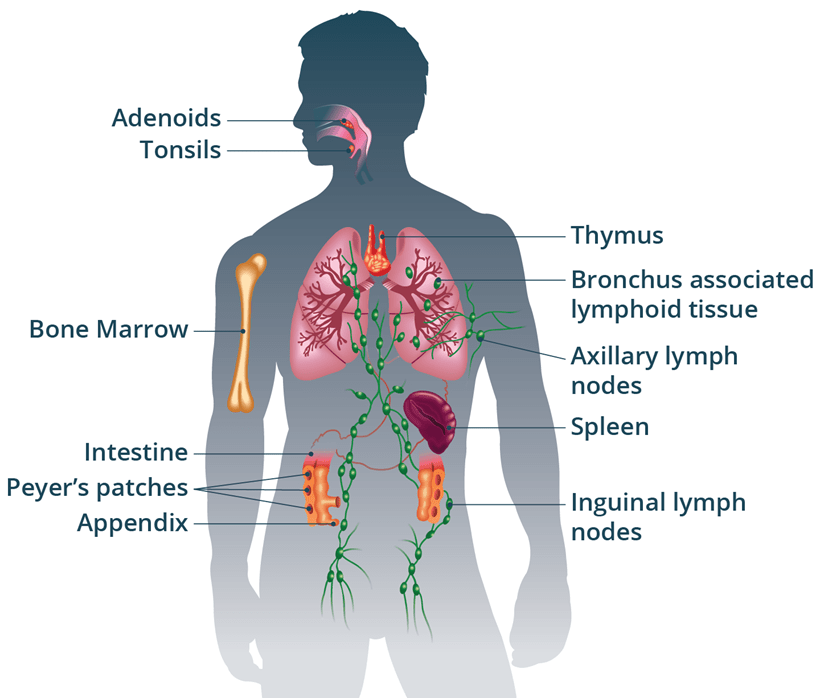
- The soft tissue inside bones where all blood cells, including immune cells, are made. It’s the birthplace of stem cells that differentiate into various immune cell types.
- Lymphatic System
- A network of vessels, nodes, and organs that transport lymph (a fluid containing white blood cells) and help filter out pathogens.
- Lymph Nodes: Small, bean-shaped structures that act as checkpoints, trapping pathogens and activating immune responses.
- Spleen: Filters blood, removes old red blood cells, and helps fight infections by producing lymphocytes.
- Tonsils and Adenoids: Trap pathogens entering through the mouth or nose.
- Thymus: Where T cells mature before heading out to fight infections.
- Skin and Mucous Membranes
- The body’s first line of defense, acting as physical barriers. Skin blocks invaders, while mucous membranes (in the nose, mouth, lungs, etc.) trap pathogens in sticky mucus and use cilia to expel them.
- Complement System
- A group of proteins in the blood that work with antibodies to destroy pathogens. They “complement” other immune responses by enhancing inflammation, attracting phagocytes, or directly lysing invaders.
- Antibodies (Immunoglobulins)
- Proteins produced by B cells that recognize and bind to specific antigens (unique markers on pathogens), marking them for destruction or neutralizing them directly.
- Innate vs. Adaptive Immunity
- Innate Immunity: The immediate, nonspecific defense (e.g., skin, phagocytes, complement system). It’s always ready to go.
- Adaptive Immunity: The slower, specific response that develops after exposure (e.g., B and T cells). It “remembers” pathogens for faster responses in the future.
- Other Supporting Players
- Liver: Produces complement proteins and removes toxins.
- Gut-Associated Lymphoid Tissue (GALT): Part of the immune system in the digestive tract, dealing with ingested pathogens.
- Cytokines: Chemical messengers (e.g., interleukins, interferons) that coordinate immune cell communication and activity.
All these parts collaborate to detect, attack, and eliminate threats while distinguishing them from the body’s own cells. It’s like a well-orchestrated army with scouts, soldiers, and strategists!
Grok. “What are the different parts of the immune system?” 2025. Accessed March 30. https://grok.com/share/bGVnYWN5_d926ea37-0ecd-4dac-92b2-5044febd52b0.
The featured image on this page is from the ROYAL ACADEMY OF ENGINEERING website.
 Salubrious Sounds