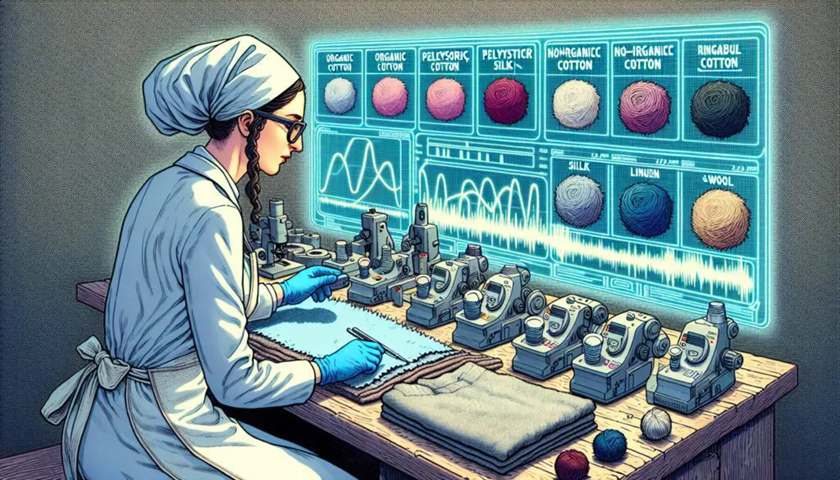
“Your wardrobe is part of your wellness toolkit.
Every thread carries potential — choose consciously.”
Contents
Fabrics/Fibers
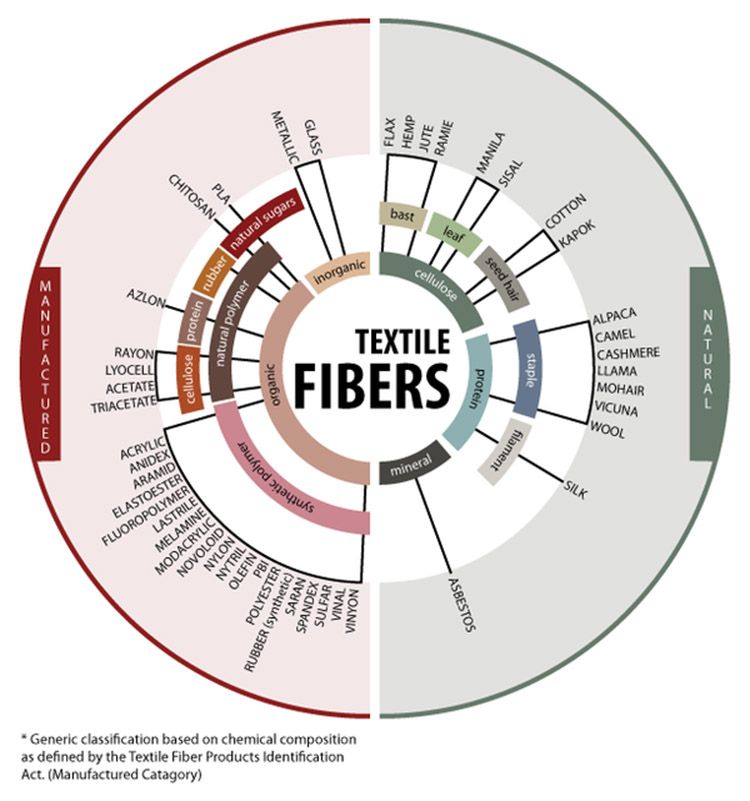
Fibers are classified by their chemical origin, falling into two groups or families: natural fibers and manufactured fibers. Manufactured fibers are also referred to as man-made or synthetic fibers. The classification system used in the United States is dictated by the Textile Fiber Products Identification Act (TFPIA). The figure below gives a breakdown of textile fibers by these groupings, and the Appendix compares the properties of some of the most commonly used fibers.
Natural Fibers
Natural fibers are those that occur in fiber form in nature. Traditionally, natural fiber sources are broken down into animal, plant, or mineral. Fibers from plant or vegetable sources are more properly referred to as cellulose-based and can be further classified by plant source. They may be separated from the plant stalk, stem, leaf, or seed. Fibers from animal sources are more properly known as protein-based fibers. They are harvested from an animal or removed from a cocoon or web. Mineral fibers are those that are mined from the earth. Except for silk, all natural cellulose- and protein-based fibers are obtained in short lengths and are called staple fibers. Silk is a continuous filament fiber.
Man-made Fibers
Man-made fibers, such as nylon, polyester, and rayon, are produced by chemical reactions controlled by people, rather than occurring naturally. The term synthetic fibers is often used to designate man-made fibers; however, to many people, this term has a negative connotation, meaning inauthentic, artificial, or fake. TFPIA classifies man made or manufactured fibers by generic names. Currently, TFPIAN recognizes 26 generic groups of man-made fibers.
- Polymers synthesized from chemical compounds, e.g., polyethylene fiber, polyurethane fiber, and polyvinyl fibers;
- Modified or transformed natural polymers, e.g., alginic and cellulose-based fibers such as rayons fiber; and
- Minerals, e.g., glasses. The term manufactured usually refers to all chemically produced fibers to distinguish them from the truly natural fibers such as cotton, wool, silk, and flax.
Frequency
Dr. Heidi Yellen conducted a study on fabric frequencies, discovering that the human body usually resonates at a frequency between 70-100 MHz. In individuals with illness, this frequency falls below 50 MHz. Her research indicated that fabrics with a frequency higher than 70 MHz, such as linen and organic cotton (which have a frequency of 5000 MHz), benefit human health. Conversely, synthetic fabrics like polyester, acrylic, and spandex have a frequency of 0, potentially contributing to health problems by lowering the body’s frequency.
Natural Fibers
The article “The Preferred Fabric for Clothing of Healing, Healthy Living and Well-being” presents linen, made from flax, as the ideal fabric for healing and wellness, both spiritually and physically. It draws from Torah teachings, scientific studies, and historical practices to support its claims. Some highlights from the article include the following.
- Linen was the fabric of choice for sacred garments in the Torah.
- High frequency fabrics, e.g., linen, are linked to vitality and healing; low frequencies correlate with disease.
- Linen fibers reflect light and are compatible with human cells.
- Used in surgical sutures due to its biocompatibility.
- Reduces solar radiation exposure and resists bacteria and fungi.
- Breathable, moisture-wicking, and temperature-regulating.
- Promotes better sleep, reduces perspiration, and supports skin health.
- Linen is said to discharge toxic energy and reconnect the body to Earth’s healing energy.
- Mixing linen and wool collapses the energy field.
- Wearing synthetic or dyed fabrics may hinder health and spiritual well-being.
- Black clothing and chemically dyed garments are discouraged due to energy depletion.
While the vibrational frequencies of natural fibers are just one factor to consider when choosing clothing, they provide an important lens through which to view our wardrobe choices. When selecting garments for personal wellness, it’s essential to consider both the environmental impact and how the fabric affects your energy.
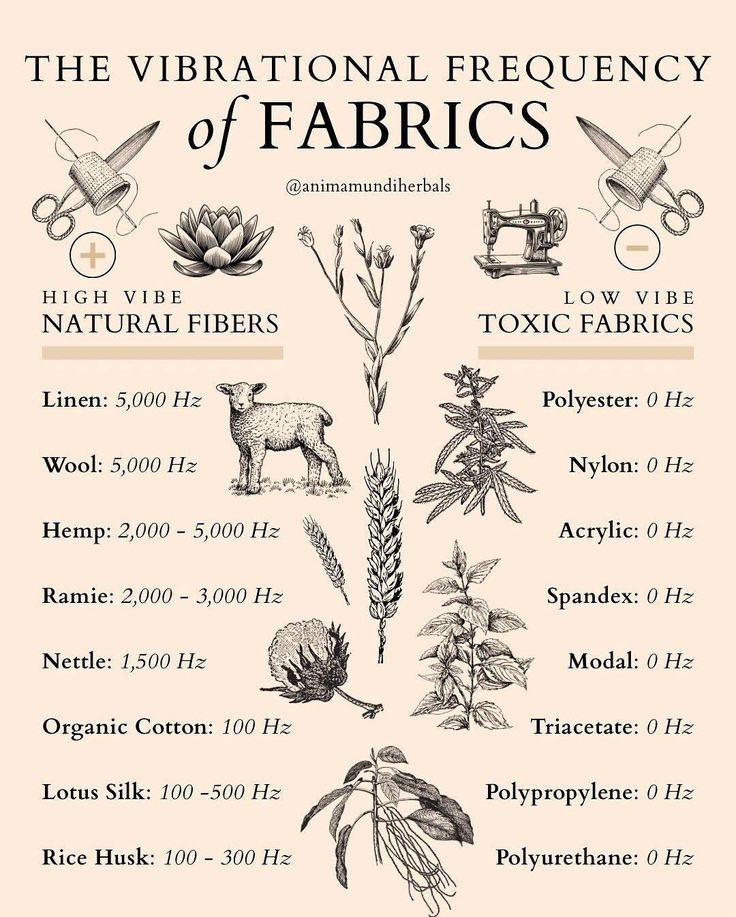
– animamundiherbals
Man-made Fibers
Scientific Insights: Polyester’s Physical & Chemical Impact
Manufactured cloth’s interaction with the body is less about vibration and more about chemical exposure and physical properties:
- Low Breathability: Polyester traps heat and moisture, which can lead to skin irritation, especially for those with sensitive skin or conditions like eczema.
- Chemical Off-Gassing: It may release volatile compounds or retain finishing agents (like flame retardants or stain repellents) that can irritate the skin or respiratory system.
- Microplastic Shedding: With wear and washing, polyester sheds microplastics that can enter the environment — and potentially the body through indirect exposure.
- Endocrine Disruption: Some polyester garments contain PFAS, BPA, or phthalates, which have been linked to hormonal imbalances and fertility concerns.
Holistic Perspective: Energetic Disconnect
From a frequency therapy or biofield viewpoint, Manufactured cloth is often considered energetically “inert” or even disruptive:
- Lack of Resonance: Unlike natural fibers, polyester doesn’t harmonize with the body’s subtle energy systems. It may act as a barrier to energy flow or reduce the effectiveness of vibrational therapies.
- Static Buildup: Its tendency to generate static electricity can interfere with grounding and energetic balance.
- Emotional Dampening: Some practitioners believe wearing synthetic fabrics can subtly affect mood, vitality, or spiritual receptivity — though this is anecdotal and not scientifically validated.
While the “frequency of fabrics” remains a topic of ongoing discussion and research, exploring the idea and making conscious choices about the materials you wear could be a step towards a more holistic approach to well-being.
Static Electricity
Our choice of fabrics goes beyond aesthetics and comfort; it plays a pivotal role in determining how our bodies function and feel. Fabrics can impact the body’s electrical balance, the quality of our sleep, and our ability to regulate body temperature.
Fabric’s Influence on the Body’s Electricity
The type of fabric we wear can have an impact on our body’s electrical balance in several ways:
- EMF Protection: Electromagnetic fields (EMF) from electronic devices can disrupt the body’s electrical balance. Some fabrics are specifically designed to shield the body from excessive EMF exposure, helping to maintain the body’s natural electrical harmony.
- Conductive vs. Insulating Fabrics: Fabrics have varying degrees of conductivity. Materials like metals and certain synthetic fibers can be conductive, which means they allow electrical currents to flow through them. On the other hand, insulating fabrics, such as cotton and wool, create a barrier, helping to preserve the body’s natural electrical balance.
- Static Electricity: Some synthetic fabrics, such as polyester and nylon, are prone to generating static electricity. This can disrupt the body’s electrical equilibrium, leading to minor shocks or discomfort. These fabrics might not just be a fashion faux pas; they could interfere with your natural electricity.
Fabric Static Electricity
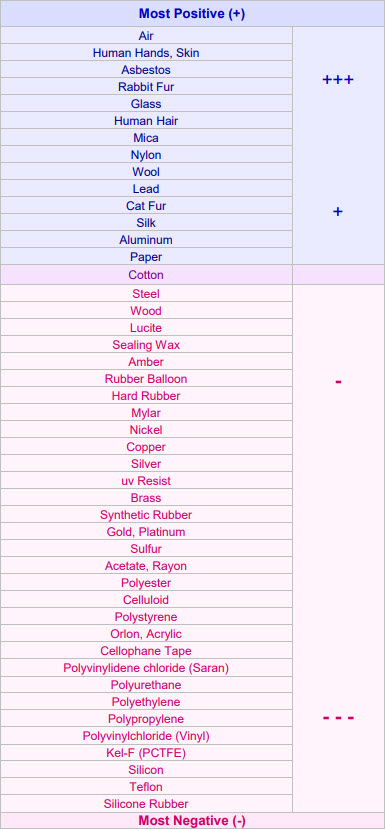
(Electron Affinity)
Fabric static electricity occurs when certain materials, particularly synthetic fibers, rub against each other, causing an imbalance in electrical charge. Synthetics like nylon and polyester are more prone to static because they don’t conduct moisture as well as natural fibers, making them more likely to hold a charge.
There are two primary types of static electricity in textiles: contact and triboelectric static electricity. Contact static electricity occurs when two different materials touch and then separate, causing a transfer of electrons and creating an imbalance of charge on their surfaces. Friction between fabrics causes triboelectric static electricity, where one material loses electrons and the other gains them, leading to static buildup.
A common complaint people have in the winter is that they shoot sparks when touching objects. This is typically caused because they have dry skin, which can become highly positive (+) in charge, especially when the clothes they wear are made of polyester material, which can become negative (−) in charge. The friction between your skin and clothing, particularly in dry conditions and with synthetic fabrics, can lead to static electricity buildup, and this buildup has been observed to be associated with the presence of free radicals on the surfaces involved.
Choose cotton, linen, wool, or cashmere for low static and comfort against the skin. Avoid polyester, spandex, and acrylic if you have sensitive skin or are in static-prone environments.
The information I used was gathered from online sources, mainly those related to triboelectric nanogenerators (TENGs) and textile interactions, with a focus on their relevance to human skin contact.
Free Radicals
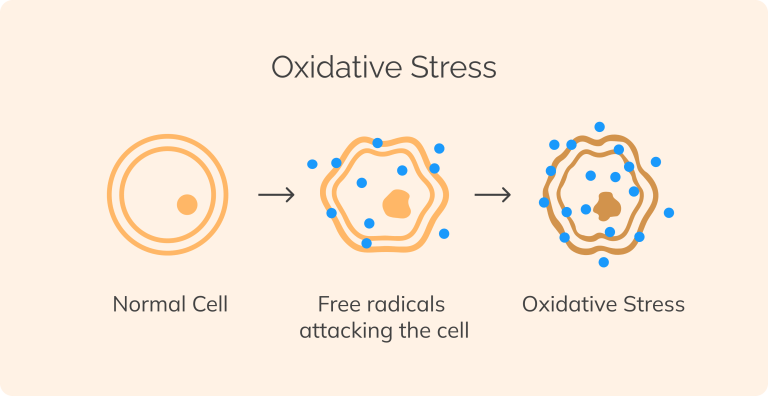
In the body, a free radical is a highly reactive molecule with an unpaired electron. This instability makes them eager to react with other molecules, potentially causing damage to cells and tissues. When the amount of free radicals exceeds the body’s ability to eliminate or neutralize them, an oxidative imbalance occurs. While free radicals can be harmful, they also play a role in normal bodily functions.
What They Are
- Free radicals are molecules or atoms with an unpaired electron, making them unstable and highly reactive.
- They are often formed during normal metabolic processes in the body, such as when cells use oxygen to produce energy.
- They can also be introduced from external sources like pollution, cigarette smoke, and radiation.
How They Affect the Body
- Oxidative Stress: When free radicals accumulate and overwhelm the body’s antioxidant defenses, it leads to oxidative stress, which can damage cells, proteins, DNA, and cell membranes.
- Arthritis
- Diabetes
- Heart disease
- Emphysema
- Alzheimer’s disease
- Cancer
- Premature aging
- Physiological Roles: Free radicals, in moderate levels, are also involved in some beneficial processes, such as signaling pathways and immune function.
Why It Matters
Clothing isn’t just fashion — it’s a second skin. The fibers we wear interact with our body’s electromagnetic field, affecting how we feel, heal, and resonate with our environment.
(Psalm 139:14) I praise you because in an awe-inspiring
way I am wonderfully made. Your works are wonderful, I know this very well.
References
“CLASSIFICATION OF TEXTILE FIBERS.” 2025. Textile and Fibre Science Gate PREPRATION. Accessed August 5. https://gpktt.weebly.com/classification-of-textile-fibers.html.
Yellen, Heidi. “Tikkun Olam to Heal the World Healing Flax.” Hebrews Today, January – March (2013): 2-5. Accessed August 5, 2025.
“High Vibration Clothing – Vibrational Frequencies and Wellness.” 2025. PUBLIC MYTH ACTIVEWEAR. March 12. https://publicmyth.com/blog/high-vibration-clothing/.
Natural fibers like wool, linen, and organic cotton offer far more than just aesthetic appeal or environmental sustainability. Their vibrational frequencies provide an added layer of value, supporting both energy and wellness in ways that synthetic fabrics simply cannot match. As we become more attuned to the energetic properties of the materials we interact with daily, making mindful fabric choices can help improve our emotional, physical, and spiritual well-being. Choosing high-vibrational natural fibers isn’t just a choice for comfort or the environment — it’s a holistic approach to personal health and energy. By wearing fabrics that support positive vibrational frequencies, we can align our clothing choices with our broader wellness goals, contributing to a more balanced and harmonious life.
Tina. 2025. “Fabric Static Electricity: The Complete Guide to Prevention!” Chiuvention. https://chiuvention.com/blog/fabric-static-electricity-the-complete-guide-to-prevention.
Wigo, Janson. 2023. “The Power of Textiles: How Fabric Affects Your Body’s Electricity, Sleep, and Heat Generation.” Opok. Opok. October 14. https://opok.com/blogs/news/the-power-of-textiles-how-fabric-affects-your-bodys-electricity-sleep-and-heat-generation.
Daniel, Tyler, Russ Bowman, and John Ball. 2019. Triboelectric. https://blog.exair.com/tag/triboelectric/.
“Materials that Cause Static Electricity.” 2025. jh399.k12.sd.us. Accessed August 5. https://jh399.k12.sd.us/dailyassign/physics/ch7materialstaticelec.pdf.
Thomme, Gina Van. 2025. “What Are Free Radicals? A Dietitian Explains.” MD Anderson Cancer Center. Accessed August 5. https://www.mdanderson.org/cancerwise/what-are-free-radicals-a-dietitian-explains.h00-159699912.html.
“Free Radical.” 2025. Free Radical – an Overview | ScienceDirect Topics. Accessed August 5. https://www.sciencedirect.com/topics/neuroscience/free-radical.
“8.2: Generation of Free Radicals in the Body.” 2023. Medicine LibreTexts. Libretexts. February 1. https://med.libretexts.org/Courses/American_Public_University/APUS%3A_Basic_Foundation_of_Nutrition_for_Sports_Performance_(Byerley)/08%3A_Vitamin_and_Mineral_Basics_-_Metabolic_Regulators/8.02%3A_Generation_of_Free_Radicals_in_the_Body.
The body creates free radicals through the normal processes of metabolism. When the amount of free radicals exceeds the body’s ability to eliminate or neutralize them, an oxidative imbalance occurs. Substances and energy sources from the environment can add to or accelerate the production of free radicals within the body. Exposure to excessive sunlight, ozone, smoke, heavy metals, ionizing radiation, asbestos, and other toxic chemicals increase the number of free radicals in the body. They do so by being free radicals themselves or by adding energy that provokes electrons to move between atoms. Excessive exposure to environmental sources of free radicals can contribute to disease by overwhelming the free radical detoxifying systems and those processes involved in repairing oxidative damage.
Lynne Eldridge, MD. 2025. “What Exactly Are Free Radicals and Why Are They Important?” Verywell Health. Verywell Health. March 21. https://www.verywellhealth.com/information-about-free-radicals-2249103.
Free radicals have a lifespan of only a fraction of a second, but during that time can damage DNA, sometimes causing mutations that can increase your risk of getting health conditions like heart disease and cancer.
Ingraham, Amy, Live Young and Aurora Garre Contreras, Live Young, and Amy Ingraham and Martina Trabacchi. 2025. “What Are Free Radicals And How Do They Affect Skin?” ISDIN Blog. July 11. https://www.isdin.com/us/blog/skincare/what-are-free-radicals-how-do-they-affect-skin/.
Free radicals. You’ve probably heard about them—often in the context of aging, pollution, or skincare. While they’re a natural part of life, an excess of these unstable molecules can stress your skin and body in a process known as oxidative stress. That’s where antioxidants come in. These powerful molecules are your body’s built-in defense—and they’re also a key part of any effective skincare routine. Let’s break down what free radicals are, how they impact your skin, and what antioxidants can do to help.
Cleveland Clinic. 2024. “What Is Oxidative Stress?” Cleveland Clinic. May 1. https://my.clevelandclinic.org/health/articles/oxidative-stress.
Oxidative stress is an imbalance of free radicals and antioxidants in your body that leads to cell damage. It plays a role in many conditions like cancer, Alzheimer’s disease and heart disease. Toxins like pollution and cigarette smoke can cause oxidative stress, while foods rich in antioxidants can help reduce it.
Additional Reading
Geertsen, Lauren. 2024. “The Healing Frequency of… Fabric?! (Support Your Health With Your Clothes).” Empowered Sustenance. February 4. https://empoweredsustenance.com/frequency-of-fabric/.
O’Brien, Lora. 2025. “How The Frequency Of Clothing Affects Our Health.” Eluxe Magazine. https://eluxemagazine.com/fashion/how-the-frequency-of-clothing-affects-our-health/.
All fabrics have a frequency that they emit which is easily measured in megahertz. Dr Yellen used an Ag-Environ machine for her study. This unique instrument measures the frequencies of fabrics and other items. Its application in Dr. Yellen’s study offered a means to quantify the vibrational qualities of different fabrics in relation to human health.
Olczyk, Janeck. 2024. “Clothing Frequencies and Their Influence on the Body and Health.” Optimumosteo. August 26. https://optimumosteo.com/en/clothing-frequencies-and-their-influence-on-the-body-and-health/.
It’s clear that the clothes we wear are not just choices of style or comfort, but can also have a significant impact on our health and well-being due to their vibrational frequencies. Natural fibers such as cotton, linen, hemp and wool offer vibrational frequencies that are harmonious with our bodies, promoting a state of well-being, vitality and comfort. Conversely, synthetic garments, with their low frequencies, can have disruptive effects on our energy and health. Making conscious choices when it comes to clothing, with a preference for natural fibers, can be a simple yet powerful way of supporting our health and well-being on a daily basis.
Reischl, Uwe and Budimir Mijovic. “Assessment of Electrostatic Potential Resulting from Friction Between Fabric Samples Made of Natural and Synthetic Fibers.” 2025. Boise State University. Accessed August 5. https://scholarworks.boisestate.edu/cgi/viewcontent.cgi?article=1130&context=commhealth_facpubs.
Synthetic fibers are known to be a major source of electrostatic potential occurring on clothing. The electrical properties of fibers are determined by their chemical composition and polymer structure. Environmental factors such as humidity, temperature, and friction intensity can influence these properties. Due to the insulative characteristics of most fabrics, fibers are able to keep their charge for relatively long periods. This can result in clothing to cling to each other, attract dust, and create discharge shocks.
“Understanding Textile Static Electricity.” 2024. Textile Tester. August 26. https://darongtester.com/all-about-textile-static-electricity/.
The reason textiles generate static electricity is due to the friction between fabrics. Most fabrics are poor conductors with high electrical resistance. During the production and processing, friction, stretching, compression, peeling, and hot air drying can all lead to static electricity in the fabric. Synthetic fibers like polyester and nylon are typically more prone to generating static electricity because they have low moisture absorption, making charge transfer and accumulation easier during friction.
Notes
Polyethylene Fibers
Polyethylene fibers are versatile, lightweight, and strong manufactured fibers made from the polymer of ethylene. They are known for their resistance to wear, creases, chemicals, moisture, and insects. These fibers are used in a wide range of applications, including ropes, fabrics for outdoor and industrial use, body armor, and even in construction materials. Polyethylene fibers, like other microplastics, can pose potential health risks to humans through various exposure routes. These include inhalation, ingestion, and skin contact. While polyethylene itself is generally considered non-toxic, the additives used in its production and the potential for microplastics to carry pathogens or other harmful substances are significant concerns.
Polyurethane Fiber
Polyurethane fiber, often known as spandex (in the US) or elastane (in Europe), is a synthetic fiber renowned for its exceptional elasticity and stretchability. It’s a versatile material commonly used to enhance the flexibility and comfort of various fabrics by combining it with other fibers. When fully cured and hardened, polyurethane (PU) itself is generally considered non-toxic and inert. However, there are potential health effects associated with polyurethane, particularly during its manufacturing, application, and degradation processes, primarily due to exposure to chemicals like isocyanates and volatile organic compounds (VOCs).
Polyvinyl Fibers
Polyvinyl fibers, specifically polyvinyl alcohol (PVA) fibers, are synthetic fibers known for their high strength, modulus, and resistance to various chemicals and environmental factors. They are widely used in concrete reinforcement, sprayed mortar, precast products, and other applications where their unique properties offer benefits like increased strength, reduced shrinkage, and improved durability. Exposure to polyvinyl fibers, particularly polyvinyl chloride (PVC), and its associated chemicals can have various effects on human health, ranging from immediate irritation to long-term chronic conditions.
Alginic Acid
Alginic acid, a natural polysaccharide extracted primarily from brown seaweed, exhibits a wide array of effects on humans, encompassing therapeutic benefits, potential side effects, and various applications in medicine, food, and cosmetics. While generally safe, some side effects and interactions warrant careful consideration, particularly for individuals with pre-existing conditions or those on other medications.
Triboelectric
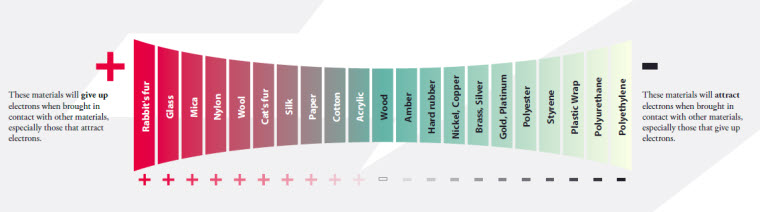
The triboelectric process involves the transfer of electrons between the materials, resulting in one material becoming positively charged (e.g., the human body) and the other negatively charged (e.g., man-made fibers). The extent and polarity of the charge depend on the specific materials and their position on the triboelectric series.
When an atom gains or loses an electron, it affects the balance that occurs within an atom. If an atom gains an electron, it now has more electrons than protons. This results in a negatively charged atom. The opposite can be said if an atom loses an electron, it now carries a positive charge. This charge imbalance is where static electricity comes from. Both positive and negative charges will remain static until contacted by or in close proximity to a conductive or grounded surface.
The strength of this charge will depend on a few different factors: the types of materials, surface area, environmental conditions, etc. will all play a role in the generation of a static charge. The triboelectric series is a scale, listing various different materials and their tendency to become positive or negative. Those at the far end of the spectrum have an increased propensity to gain or lose an electron, while those in the center are more likely to remain balanced. When two materials on opposite ends of the spectrum come into contact with one another, it poses the greatest risk of generating high levels of static electricity. The chart below shows some common materials and where they fall on the triboelectric series.
Free Radical
A free radical is a molecule that is missing electrons. It is like a mugger looking for someone’s purse to steal. When a free radical steals electrons from the cell, it damages the cell. These are unstable molecules that can damage cells and DNA. They are a natural byproduct of metabolism and can also be created by environmental factors such as pollution and UV radiation. Free radical damage is associated with various health problems, including heart disease, cancer, and Alzheimer’s disease. By consuming foods rich in antioxidants, you can help protect your body from this damage and potentially lower your risk of these diseases.
The featured image on this page from the is Seeker Notes website.
 Salubrious Sounds