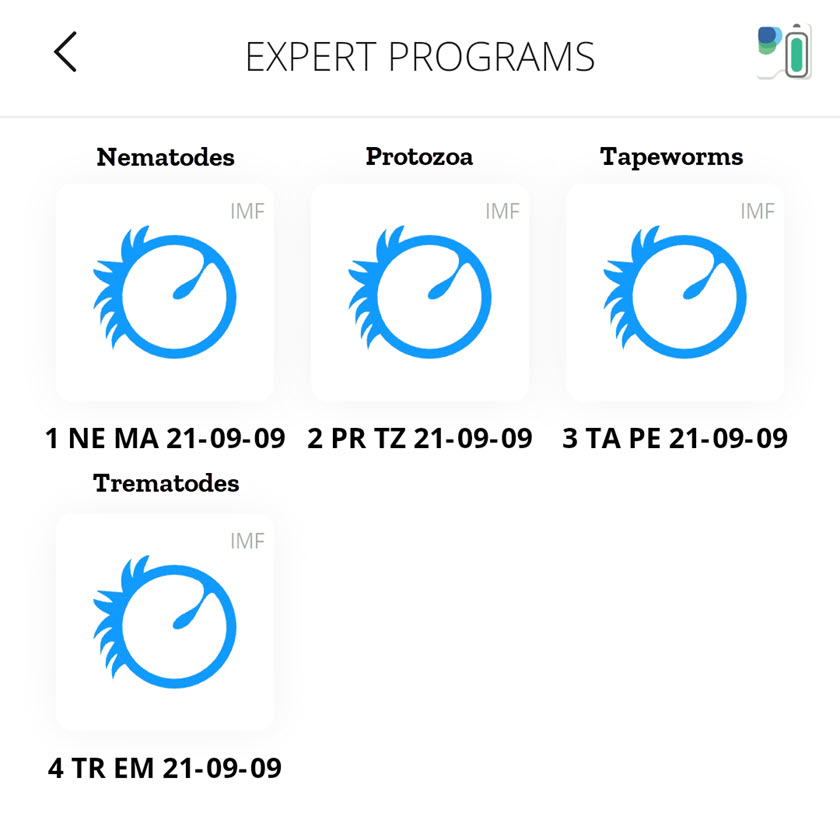
The Healy Parasite Expert Programs are a specific set of programs offered by Healy, a device that uses microcurrent frequencies to harmonize the body’s bioenergetic field, to address the following types of parasites: nematodes, protozoa, tapeworms and trematodes.
How the Healy Works
- Individualized Microcurrent Frequencies (IMF): Healy employs IMF [#] programs, which are designed to support well-being by harmonizing the Bioenergetic Field [*]. This concept suggests that the body and all living things have an energy field that can be influenced by frequencies.
- Resonance analysis: The device uses a “Resonance analysis function” to determine which frequencies are most needed by the user at a given moment.
- Frequency application: Once the resonance is determined, the Healy applies specific frequencies believed to harmonize the Bioenergetic Field and potentially address imbalances. The Healy applies electrical currents with frequencies from 0.1 Hz to 1 MHz. Some programs use a Resonance analysis function to determine frequency application progress.
Recommendations for Use
- From the POTENTIAL CAUSES section of the Inner Voice Report With Vital Scan, locate the potential Parasites on each of the zones, that correspond to each of the audio files, outlined in the pages of the report.
- Limit frequency applications to two to three per day, with each program lasting typically 20 to 75 minutes.
- Integrating healthy practices like drinking water, getting fresh air, exercise, and a balanced diet is recommended to support the effects of frequency applications.
Cryptosporidium
Entamoeba Coli
Entamoeba Gingivalis
Malaria
Giardia Lamblia
Plasmodia
Toxoplasmosis
Trichomonas
Capillaria (Capillariasis)
Hookworm
Roundworm
Toxocara Canis
Toxocara Cati
Dipylidium Caninum (the most common species of Dipylidium and is also known as the “flea tapeworm”) [†]
Echnococcus
Taenia Saginata
Taenia Solium
Tapeworm
Cross Reference of Parasites Identified by Vitals Scan to Healy Parasite Expert Programs
- Protozoa: Single-celled organisms, like Plasmodium (causes malaria), that often spread through contaminated water, food, or insect bites.
- Helminths: Multicellular worms, including flatworms (e.g., tapeworms, flukes) and roundworms (e.g., Ascaris, hookworms), typically transmitted via soil, food, or water.
- Tapeworms: They are a type of parasitic flatworm (cestodes) with long, segmented bodies.
- Nematodes: Specifically, they are a type of parasitic worm characterized by their long, slender, unsegmented bodies, often referred to as roundworms..
- Trematodes: They are a type of parasitic flatworm (flukes) with unsegmented, leaf-like bodies.
- Ectoparasites: Parasites living on the host’s surface, such as lice, fleas, and ticks, which can also transmit other pathogens.
- Trichomonas: Caused by Trichomonas vaginalis, this is a protozoa. It’s a single-cell parasite transmitted mainly through sexual contact, causing trichomoniasis, a common sexually transmitted infection.
See the Parasite Cleanse page for information on the use of binders during a parasite cleanse.
Additional Reading
“Learn About Parasites – Learn About Parasites – Western College of Veterinary Medicine.” 2025. Wcvm. Accessed June 14. https://wcvm.usask.ca/learnaboutparasites/index.php.
Notes
[#] Individualized microcurrent frequencies, also known as Frequency Specific Microcurrent (FSM), are a type of therapy that uses specific electrical frequencies to stimulate tissue healing and reduce pain. FSM applies extremely low-level electrical currents, often imperceptible, to the body to target and treat various conditions by matching the frequency to the tissue or condition being addressed. [1,2,3]
How it Works
- Specific Frequencies: FSM utilizes different frequencies, measured in hertz (Hz), to target specific tissues and conditions. [1,3]
- Low-Level Current: The electrical current used in FSM is very low, typically in the microampere range, which is much less than a Transcutaneous Electrical Nerve Stimulation (TENS) unit. [3,4]
- Cellular Level: These frequencies are believed to stimulate cellular activity, promoting tissue repair, reducing inflammation, and relieving pain. [2,3]
Applications
- Pain Management: FSM is used to address various pain conditions, including muscle pain, nerve pain, and joint pain. [1,3]
- Tissue Repair: It can aid in the repair of damaged soft tissues, scar tissue, and even improve skin elasticity. [2,3]
- Inflammation: FSM can help reduce inflammation associated with various conditions. [2,3]
- Nerve Function: It may also support nerve function and repair. [2]
- Other Uses: FSM has been explored for conditions like anxiety, insomnia, and even wrinkles. [3]
Key Differences from TENS
- Current Intensity: TENS units typically use higher current intensities (milliamps) than FSM (microamps). [3,5]
- Muscle Stimulation: TENS can cause muscle contractions, while FSM does not. [6]
- Targeted Approach: FSM is more targeted, using specific frequencies for specific tissues and conditions, while TENS is more general in its approach. [3,6]
Important Considerations
- Not for Everyone: FSM is generally safe, but it’s not recommended for individuals with pacemakers, implanted pumps, uncontrolled seizures, or during pregnancy.
- Consult a Practitioner: It’s crucial to consult with a qualified healthcare professional to determine if FSM is appropriate for your specific situation and to ensure proper application. [7]
[1] https://www.schneckmed.org/treatments/frequency-specific-microcurrent
[2] https://www.normanpastorekmd.com/frequency-specific-microcurrent-fsm
[3] https://www.wellbeyondmed.com/frequency-specific-microcurrent
[4] https://my.clevelandclinic.org/health/treatments/15935-frequency-specific-microcurrent
[5] https://www.thehealingcollective.us/post/what-is-frequency-specific-microcurrent
[6] https://www.atlanticchiropractic.ca/everything-about-frequency-specific-microcurrent-therapy
[7] https://chirodenton.com/what-is-frequency-specific-microcurrent/
[*] A bioenergetic field, also known as a biofield, is a concept in alternative medicine that refers to the energy field surrounding and within living organisms. Bioenergetic medicine and biofield therapies are based on the idea that this field can be manipulated to promote healing or diagnose imbalances.
A bioenergetic field, also known as a biofield, is a concept in alternative medicine that refers to the energy field surrounding and within living organisms. Bioenergetic medicine and biofield therapies are based on the idea that this field can be manipulated to promote healing or diagnose imbalances. [1,2,3]
- Energy and Health: Bioenergetic medicine and therapies posit that energy plays a significant role in maintaining and restoring health. [1,4]
- Mind-Body Connection: Bioenergetic therapies often emphasize the interconnectedness of the mind and body, suggesting that emotional and psychological states can influence the bioenergetic field. [4,5]
- Energy Fields: Biofield therapies, such as Reiki and therapeutic touch, aim to work with subtle energy fields thought to surround the body. [2]
- Diagnosis and Treatment: Practitioners may use various methods, including hands-on techniques or instruments, to assess the bioenergetic field and potentially manipulate it to restore balance and promote healing. [1,2]
- Scientific Evidence: While biofield therapies are popular, there is limited scientific evidence to support their effectiveness, according to Medical News Today and the existence of the biofield itself remains largely unproven. [2]
[1] https://www.d.umn.edu/medweb/Modules/CompAltMed/bioenergetic/energy.html
[2] https://www.medicalnewstoday.com/articles/biofield-therapy
[3] https://pmc.ncbi.nlm.nih.gov/articles/PMC4654789/
[4] https://aihcp.net/2024/09/27/understanding-holistic-health-and-bioenergetic-medicine/
[5] https://www.verywellhealth.com/bioenergetics-7557812
[§] Bed bugs are parasites, specifically ectoparasites, that feed on the blood of humans and other warm-blooded animals. It is not a protozoa, nematode, tapeworm, or trematode. While they are not known to transmit diseases, they are a public health concern due to the discomfort and potential for secondary infections from their bites. Bed bugs are nocturnal and feed on blood while their host is sleeping, typically for 5-10 minutes at a time.
[‡] Scabies is caused by Sarcoptes scabiei, which is an ectoparasite (specifically, a mite). It is not a protozoa, nematode, tapeworm, or trematode. Sarcoptes scabiei is a microscopic arachnid that burrows into the skin, causing intense itching and a rash, but it lives on the host’s surface or in the upper skin layers.
[†] Dipylidium caninum is a tapeworm of the small intestines of domestic dogs and cats and free-ranging canids and felids.
Important Note: While Healy devices are FDA-cleared for the temporary relief of pain, claims that they can diagnose or treat specific conditions like parasites are not supported by scientific evidence. The Healy programs are not medical applications and are not intended to cure or prevent any disease or medical condition. It’s crucial to consult a qualified medical professional for any health concerns or before using Healy for medical purposes.
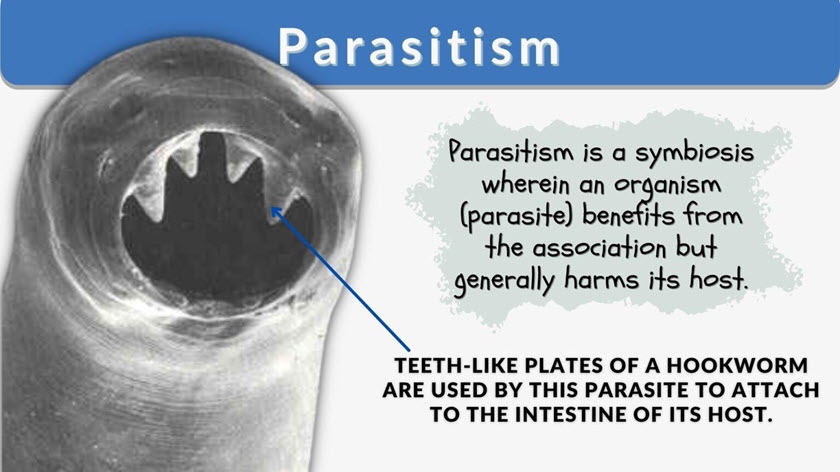
The featured image on this page is from the Biology Online website.
 Salubrious Sounds