
Contents
- What is a food journal?
- Benefits of a Food Journal
- How to Keep a Food Journal for Intolerance
- Tips for Successful Food Journaling
- Things to Include in Your Health Journal
- Learning From Your Journal
- Ingredients
- References
What is a food journal?
In general, a food journal is a living document that you use to keep track of everything you eat and drink — and that includes snacks, candy, coffee and anything else you have for and between meals.
“The more detail you include, the more useful your food journal will be” says Peart. “And you can make it as specific or as general as you like.”
“A food journal helps us see the connection between what we’re eating and how we’re feeling, how we’re sleeping, how we’re performing when we exercise or our ability to concentrate at work,” explains Peart. “If we’re not keeping track, we don’t necessarily make that connection.”
That’s especially true for anyone with health or digestive conditions like:
“Keeping a food journal helps you connect foods to symptoms,” Peart adds.
If you need to keep track of trigger foods because you have IBS, diverticulitis or a food sensitivity to ingredients like gluten or lactose, you might keep track of additional details that include:
- A description of your symptoms.
- When you experience symptoms and how long they last.
- How you feel when you eat certain foods and how you feel after.
- The severity of symptoms you experience.
“Keeping a food journal doesn’t have to be cumbersome or take a lot of time,” says Peart. “You can use a simple number scale to rate the severity of symptoms, or you can use emojis like a smiley face, neutral face or sad face to track how you’re feeling.”
Benefits of a Food Journal
Individuals use food journal for many reasons. Primarily, they are helpful when following a specific diet or bringing awareness to food choices. Consistency is vital when tracking foods, as you need plenty of data to find patterns or trends.
Food journals allow for customization and personalization to fit your needs. In addition to tracking food choices, you can also monitor your other habits, such as hydration, exercise, or other self-care routines. Using this information, you can identify the practices that work best for your mental and physical health.
Monitor Intake
Food journals make it easier to track your food and beverage intake. You can use the information to find trends and patterns between your eating habits and how you feel mentally or physically. For instance, you could find that you eat more when feeling tired or eat less on exercise days. This information can be beneficial when dieting or determining food allergies.
Balance in Healthy Habits
Other healthy routines tend to follow when you incorporate one healthy habit into your life. Suppose you become consistent in monitoring your food choices. As a result, you may feel motivated to track your exercise throughout the week. Furthermore, certain food logs include columns for other information, such as hydration, meditation, yoga, or exercise tracking.
Tracking your foods can also promote balanced eating. You may find patterns in your eating habits, such as overeating on the weekends. Using a chart, you can note these trends and change your routine to add healthier items into your routine. Similarly, you can incorporate a meal planning chart into your food diary to know the foods you will eat for the week ahead.
Provides Guidance
A journal outlines your eating habits, such as the food amount and types, allowing you to use the details to maintain or change your eating habits. For example, you may find that certain foods do not make you feel good, whereas others make you feel great. You can, therefore, use this information to create a meal plan with your “feel good” foods.
Accountability
Maintaining a food journal gives you a way to write down your foods as you eat throughout the day. People often keep the chart in an accessible area to ensure they keep up with it. Similarly, they could set alarms or have someone remind them to write down their meals. Furthermore, individuals tracking their food choices can set goals and rewards to ensure they stick with tracking.
How to Keep a Food Journal for Intolerance
If you suffer from food intolerances but do not know which foods are the culprit, you may benefit from using a journal. A food journal allows you to write down the food you eat and the bodily symptoms you experience throughout the day.
Unlike an allergy, an intolerance is when your body has an adverse chemical reaction to a drink or food item. As a result, you may experience digestion issues, such as bloating, pain, or nausea. After using a journal for a set period, you may start to notice patterns with your intake and symptoms, which can help you determine foods or drinks to avoid in the future.
Tips for Successful Food Journaling
- Write down the food or beverage as soon as you consume it. Don’t wait until the end of the day because your recollection is likely to be less accurate.
- Be as specific as you can with the food or beverage. For example, if you are drinking a latte, note the type and size.
- Be sure to include any alcoholic beverages you consume.
- A smartphone app like Lose It! or MyFitnessPal can support your efforts. These apps also offer information on calories and other nutrients.
Things to Include in Your Health Journal
Here are some things to consider including in your health journal:
Symptoms
Maintain a list of the symptoms that you are currently experiencing by creating a symptom journal. Be sure to record your experiences as soon as possible so you don’t forget subtle details. Collect key information, such as the time of day, what you were doing prior to the onset of symptoms, and anything you feel is significant about the experience.
If your symptoms involve pain or discomfort, consider using a rating on a scale. For example, on a scale of 1 to 10 (with 10 being the highest), rate the severity of your symptoms. This will give you a reference point, making it easier to evaluate changes over time.
Numbers
- Lab test results
- Health goals/targets
- Weight
- Hours of sleep
- Minutes of physical activity
- Temperature
- Blood pressure
- Other biometrics that includes a number
Viewing your health metrics in one place can help you see patterns and changes more clearly. These insights can help you make informed decisions about your health.
Dates
Keep a running list of important dates:
- Doctor’s appointments
- Dates of symptoms
- Medical procedures
- Due dates (immunizations, health screenings, repeat labs, etc.)
If you’ve ever struggled to recall details about your medical history, keeping records in your journal can help.
Medications
Keep track of any prescribed or over-the-counter medications you are taking to manage your health. Keep a simple running list of all of your medications, along with the date they were first prescribed. You may also want to consider logging any symptoms you experienced after starting or stopping a medication.
Supplements
Similar to medications, supplements can also play a role in your heath, and some can even lead to expected and unexpected symptoms. These details can be helpful resources to your healthcare team as they help you choose the best treatment options for you.
If your health goals involve nutrition, it may be useful to keep a food journal. Keeping detailed records of the foods you eat can help you uncover vital clues about food sensitivities, habits and patterns related to your food choices, and other factors related to nourishing your body.
Food
Things to include:
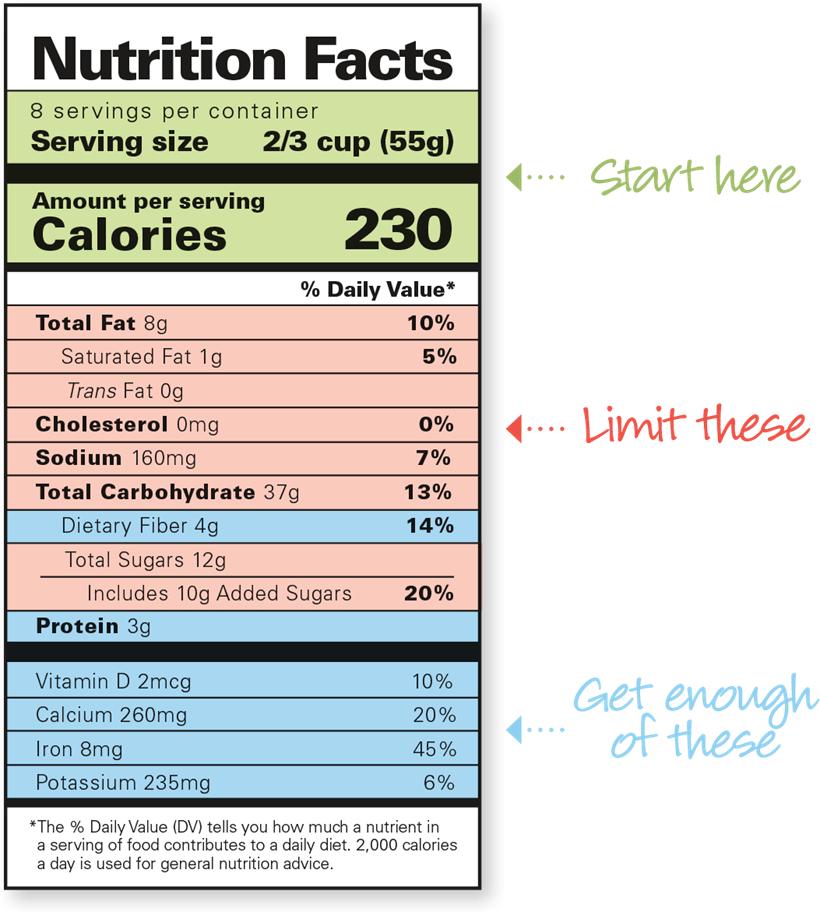
- List the ingredients (paste a food nutrition label next to the food).
- Start with the serving information: This tells the size of a single serving and the total number of servings per container. The serving size reflects the amount people typically eat or drink.
- Note how much you ate.
- Check total calories per serving and container: Notice how many calories are contained in one serving. Compare this to the number of servings you eat. If you eat two servings, you double the calories and nutrients.
- Limit certain nutrients: Check key nutrients and understand what you’re looking for.
- Note any of the health-harming foods.
- Focus on the amount of saturated and trans fats rather than the amount of total fats. Not all fats are bad. Avoid trans fat. When the Nutrition Facts label lists “0 g” of trans fat but includes “partially hydrogenated oil” in the ingredient list, it means the food contains some trans fat, but less than 0.5 grams per serving. So, if you eat more than one serving, you could end up eating too much trans fat.
- Total sugars can include both natural and added sugars. Limit the amounts of added sugars, saturated fat and sodium you eat. Compare labels on different brands or similar products and choose foods with less of these nutrients when possible.
- Note any of the health-harming foods.
- Get enough of the beneficial nutrients: Make sure you get enough of the nutrients your body needs, such as calcium, dietary fiber, iron, potassium and vitamin D. We all need more dietary fiber to help reduce blood cholesterol levels, provide us with a feeling of fullness and manage a healthy body weight. Adults need at least 25-35 grams of fiber daily for good health.
- Understand % Daily Value: The % Daily Value (DV) tells you the percentage of each nutrient in a single serving, in terms of the daily recommended amount. If you want to consume less of a nutrient (such as saturated fat or sodium), choose foods with a lower % DV (5% or less). If you want to consume more of a nutrient (such as fiber), choose foods with a higher % DV (20% or more).
Mood
With so much attention focused on physical health physical health, it’s easy to overlook other areas of your well-being. Mental health is an equally important element that can also have a direct impact on your physical health.
After all, your mood directly impacts your behaviors, and even the seemingly insignificant habits can influence your health over time. For example, if your mental health needs are not met you may find it difficult to support other areas of your life, such as preparing healthy meals, getting enough physical activity, or tending to your preventive health care needs.
Feelings
Most traditional health records include numbers-based details about your physical health, but few take into account how you feel about what’s happening inside your body.
Your personal health journal can also become an outlet for the wide range of feelings you experience. For example, receiving concerning test results or a new diagnosis can lead to feelings of fear and overwhelm. When those feelings bubble up, having a safe place to release them is vital. Your journal can help you process distressing information and help you make sense of it.
Questions
You can also use your journal to keep a running list of questions to ask your health care team. Questions may include how to know when to seek medical attention, how a specific treatment works, or what to expect as a health condition progresses. Having a place to “park” your questions can also help you manage anxiety and worry.
Learning From Your Journal
Personal health journals are a great way to stay organized and keep track of your treatment and health activities in one place. But what you’re also building is a wealth of information and data that can be used to draw important correlations and insights about your health. Here are a few things you can learn:
Patterns and Trends: By tracking symptoms, medications, and lifestyle factors, a personal health journal can help identify patterns or trends that may be impacting your symptoms and how you feel. This can help you identify lifestyle triggers and make helpful adjustments to your care plan.
Progress: A health journal can also help you track your progress towards health goals, such as starting an exercise routine or reducing your blood pressure. By seeing how far you’ve come, you may feel extra motivated to continue making positive changes.
Treatment Effectiveness: By tracking symptoms alongside your medications, a personal health journal can help evaluate the effectiveness of your treatments. This can help you make informed decisions about your care and communicate more effectively with your healthcare providers.
Ingredients
“A Simple Way to Read Nutrition Labels.” 2025. Partnership For A Healthier America. Accessed March 27. https://www.ahealthieramerica.org/articles/a-simple-way-to-read-nutrition-labels-1765.
Feller, Maya. 2025. “I’m a Registered Dietitian, and These Are the Only Things I Look for on Nutrition Facts Labels.” Kitchn. The Kitchn. February 13. https://www.thekitchn.com/how-to-read-nutrition-facts-label-23705776.
“How to Understand and Use the Nutrition Facts Label.” 2025. U.S. Food and Drug Administration. FDA. Accessed March 27. https://www.fda.gov/food/nutrition-facts-label/how-understand-and-use-nutrition-facts-label.
“The Nutrition Facts Label.” 2025. U.S. Food and Drug Administration. FDA. Accessed March 27. https://www.fda.gov/food/nutrition-education-resources-materials/nutrition-facts-label.
Mendelsohn, Hadley. “How to Read a Nutrition Label: Nutrition Facts for Healthy Eating.” 2025. hers. March 19. https://www.forhers.com/blog/how-to-read-a-nutrition-label.
Rawat, Yogesh. 2025. “Decoding Nutrition Labels for Smarter Food Choices.” YourHealthBasket. March 20. https://yourhealthbasket.co.uk/blog/how-to-read-nutrition-labels-a-simple-guide-that-actually-makes-sense/.
“Understanding Food Nutrition Labels.” 2024. Www.Heart.Org. February 29. https://www.heart.org/en/healthy-living/healthy-eating/eat-smart/nutrition-basics/understanding-food-nutrition-labels.
References
Ajmera, Rachael. 2021. “How To Keep a Food Journal: Instructions and Tips.” Healthline. Healthline Media. September 16. https://www.healthline.com/nutrition/food-journaling-instructions-and-tips.
Although many people focus solely on what they eat or drink when filling out a food journal, keeping track of how your mood changes throughout the day and with each meal can also be beneficial. In fact, identifying how you feel before or after eating certain foods can make it easier to identify patterns and understand how your diet might be affecting your mental health. If you struggle with emotional eating, determining which factors trigger you could also help treat its root cause to prevent overeating. In particular, studies show that negative emotions like anxiety, sadness, and perceived stress could increase food intake and contribute to overeating.
Cleveland Clinic. 2024. “Food Journaling 101.” Cleveland Clinic. Cleveland Clinic. November 25. https://health.clevelandclinic.org/how-to-keep-a-food-journal.
Food journaling is a marathon, not a sprint. In the beginning, give yourself some grace and try to record what you’re consuming one meal at a time. You don’t have to have exact measurements, either.
“Creating a Personal Health Journal (Health Diary).” 2022. familydoctor.org. August 18. https://familydoctor.org/creating-a-health-journal/.
A personal health journal (health diary) is a record of your health. It is a journal you keep yourself. The journal helps you keep track of every aspect of your health.
Fisher, Stacy. 2022. “Health Matters: How to Create a Personal Health Journal.” Journaling For The Health Of It®. Create Write Now. February 14. https://www.createwritenow.com/life-matters-blog/health-matters-how-to-create-a-personal-health-journal.
Creating a personal health journal can help you better manage your health in a number of different ways. Journaling helps you explore your health more holistically, tapping into your intuition to recognize when something needs your attention.
“Food Diary Templates.” 2023. OpenDocs. March 22. https://opendocs.com/food-diary-template/.
A food diary template assists an individual in tracking their meal choices when dieting or following a specific food plan. It provides ongoing data on eating patterns so that the user can maintain their choices the same or change them to better suit their goals. A person can download the template to fill it out electronically, or they can print it and write the details by hand. Each chart uses a specific format, however, they commonly include sections for breakfast, lunch, dinner, snacks, and dessert. Individuals can enter what they had for the meals, along with calories, nutrients, or macronutrients.
Katherine D. McManus, MS. 2019. “Why Keep a Food Diary?” Harvard Health. https://www.health.harvard.edu/blog/why-keep-a-food-diary-2019013115855.
A food diary can be a useful tool in this process. It can help you understand your eating habits and patterns, and help you identify the foods — good and not-so-good — you eat on a regular basis. Research shows that for people interested in losing weight, keeping a journal can be a very effective tool to help change behavior. In one weight loss study of nearly 1,700 participants, those who kept daily food records lost twice as much weight as those who kept no records.
Printabulls Team. 2023. “Food Journals – 36 FREE Printables.” printabulls. https://www.printabulls.com/health-and-fitness/food-journals/.
Wells, Katie. 2021. “How to Keep a Health Journal.” Wellness Mama®. December 5. https://wellnessmama.com/mindset/health-journal/.
If you or someone in your family suffers from unknown allergic reactions, sudden mood changes, constipation, or other health issues, it’s extra important to keep track of your health with a daily journal. You can decide what’s important to include in your journal entries, and who knows — it might help you discover a hidden health problem or even inadvertently create new healthy habits!
Zhao, Claudia. 2024. “Creating Your Own Personal Health Journal.” Wave Health. Wave Health. July 1. https://www.wavehealth.app/blog/personal-health-journal.
All in all, a personal health journal can be a valuable tool for managing one’s health and improving their wellbeing. Keeping a detailed record of your health status no longer has to be tedious and time-consuming. There are patient tools out there that make it easy to keep a comprehensive health log that allows you to better understand your health.
The featured image on this page is from the Unbroken Mama website.
 Salubrious Sounds