Contents
- Herbal Cleanses
- Dietary Practices
- Purgative Methods
- Cultural Examples
- How They’re Done
- Parasite Hatching Cycles
- Cleansing Considerations
- Sugar Versus Parasites
- Foods Parasites Hate
- Toxins
- References
- Notes
Traditional parasite cleanses are practices rooted in folk medicine, herbalism, and cultural traditions aimed at expelling parasites from the body. They typically rely on natural remedies—herbs, foods, or fasting—rather than modern pharmaceuticals, though their effectiveness varies. Here’s a rundown of some common traditional approaches across cultures:
Herbal Cleanses
- Wormwood (Artemisia absinthium): Widely used in Europe and North America, this bitter herb is believed to paralyze intestinal worms like roundworms or pinworms, making them easier to expel. It’s often brewed as a tea or taken in tincture form. The active compound, absinthin, is thought to irritate parasites, though overuse can be toxic to humans.
- Black Walnut Hulls: Popular in Native American and Western herbal traditions, green hulls of black walnuts (Juglans nigra) are used for their supposed antiparasitic properties, targeting tapeworms and flukes. They’re typically consumed as a tincture or powder, often paired with wormwood.
- Cloves: In Ayurvedic and Western practices, clove buds are used to kill parasite eggs, especially in the gut. They’re ground into powder or steeped in tea, often combined with wormwood and black walnut in a “triad” cleanse. Eugenol, a compound in cloves, may have antimicrobial effects.
- Pumpkin Seeds: A staple in Native American and Mexican traditions, raw pumpkin seeds are eaten to expel tapeworms and roundworms. They contain cucurbitacin, which may paralyze worms, loosening their grip on the intestinal wall. A typical dose is a handful chewed daily for weeks.
- Papaya Seeds: In tropical regions like Central America and Southeast Asia, papaya seeds are chewed or blended into smoothies. They’re thought to break down parasite proteins due to enzymes like papain, targeting worms like Ascaris.
Dietary Practices
- Garlic: Across cultures—Ancient Egypt, China, and Europe—raw garlic is consumed for its sulfur compounds (e.g., allicin), believed to repel or kill parasites like giardia or worms. It’s eaten crushed, in honey, or as a paste.
- Fasting or Bitter Foods: In Traditional Chinese Medicine (TCM) and Ayurveda, fasting or eating bitter greens (like neem or dandelion) is used to “starve” parasites and detoxify the gut. Parasites like tapeworms rely on host nutrients, so reducing food intake might weaken them, though this lacks strong evidence.
- Coconut: In South Asian and Pacific traditions, coconut oil or flesh is consumed for its medium-chain fatty acids (like lauric acid), thought to disrupt parasite membranes, especially protozoans like giardia.
Purgative Methods
- Castor Oil: Used in India and colonial-era Europe, castor oil is taken to flush out intestinal worms. It acts as a laxative, expelling parasites along with stool. It’s often paired with herbs like turmeric.
- Enemas: In some African and South American traditions, herbal enemas (e.g., with garlic or neem) are used to target parasites in the lower gut, like pinworms. This is less common today but persists in alternative circles.
Cultural Examples
- Ayurveda (India): A cleanse might combine neem, turmeric, and triphala (a fruit blend) to purge worms while balancing digestion. It’s often part of a broader detox called panchakarma.
- TCM (China): Bitter herbs like ku shen (sophora root) or fasting with rice porridge aim to clear “dampness” and parasites from the body.
- Indigenous Americas: Beyond pumpkin seeds, tribes used pine bark or sage infusions to treat infections, believing they expelled “evil spirits” (sometimes parasites).
How They’re Done
Traditional cleanses often last days to weeks. A common protocol might involve taking herbs (e.g., wormwood and cloves) for 10-14 days, paired with a bland diet (no sugar or meat, which some believe “feed” parasites), followed by a laxative like castor oil to flush everything out. Dosages vary—teas might be a teaspoon of herb per cup, tinctures a few drops—but precision is rare in old recipes.
Parasite Hatching Cycles
The hatching cycle of parasites that infect humans varies widely depending on the type of parasite—whether it’s a protozoan, helminth (worm), or ectoparasite like a louse. I’ll break this down into key points about some common human-infecting parasites and their life cycles, focusing on the “hatching” or reproductive stages relevant to infection.
- For protozoan parasites like Plasmodium (malaria), there’s no traditional egg or hatching phase in humans. Instead, after a mosquito bite, sporozoites enter the bloodstream, travel to the liver, and multiply asexually into merozoites. These burst out of liver cells (akin to “hatching” in a loose sense) within 5-16 days, depending on the species (e.g., P. falciparum is faster than P. vivax), then infect red blood cells, cycling every 48-72 hours. Symptoms like fever align with this rupture.
- Helminths, such as Schistosoma (blood flukes), involve an egg stage. Eggs are laid by adult worms in human blood vessels, often near the intestines or bladder. They don’t hatch inside the body; instead, they’re excreted in feces or urine. Once in water, eggs hatch into miracidia within hours, infecting snails. After weeks, cercariae emerge from snails and penetrate human skin, restarting the cycle. From skin penetration to egg-laying takes about 4-6 weeks.
- Tapeworms (Taenia species) are different. Humans ingest cysts in undercooked meat, not eggs. Inside the gut, the cyst’s larval form (e.g., cysticercus) “hatches” into a juvenile worm within hours, attaching to the intestinal wall. Eggs only appear in feces after 2-3 months when the worm matures, but these infect livestock, not humans directly.
- Roundworms like Ascaris lumbricoides start with eggs ingested from contaminated food or soil. These hatch in the small intestine into larvae within 1-2 days, migrate through the lungs (10-14 days), and return to the gut to mature into egg-laying adults in 2-3 months. A single female can produce 200,000 eggs daily.
- Pinworms (Enterobius vermicularis) are simpler. Eggs, laid near the anus, hatch on the skin or under fingernails within 6 hours if ingested, maturing in the gut in 2-4 weeks. Their cycle is fast and direct.
- Ectoparasites like head lice (Pediculus humanus capitis) lay eggs (nits) on hair shafts. These hatch into nymphs in 7-10 days under warm scalp conditions, maturing in another week. They don’t hatch inside the body but feed externally.
Key factors influencing these cycles include temperature, moisture (for external stages), and host immune response. In humans, the “hatching” moment—whether it’s eggs cracking open or larvae emerging—often marks the start of symptomatic infection, though timing varies: hours for pinworms, days for Ascaris, or weeks for schistosomes post-exposure.
Cleansing Considerations
When embarking on a parasite cleanse, there are several factors to keep in mind to ensure it’s done safely and effectively. Here’s a breakdown of key considerations:
- Bowel Cleanse: When performing a parasite cleanse, the dying parasites will be releasing toxins which you must eliminate through the bowel. Be sure to have a clean, well moving bowel before attempting, and drink plenty of water before, during and after, a parasite cleanse.
- Consult a Healthcare Professional: Before starting, it’s wise to talk to a doctor or a qualified practitioner, especially if you have underlying health conditions, are pregnant, or are on medications. Parasite cleanses can be intense and might interact with your body in unexpected ways.
- Symptoms and Diagnosis: Consider why you think you need a cleanse. Common signs of parasitic infection include digestive issues (bloating, diarrhea, or constipation), fatigue, unexplained weight loss, or skin irritations. However, these can also stem from other causes, so a proper diagnosis (like a stool test) might be useful to confirm parasites rather than guessing.
- Type of Cleanse: There are various approaches—herbal, dietary, or pharmaceutical. Herbal cleanses often use ingredients like wormwood, black walnut, clove, or oregano oil, while pharmaceutical options (like albendazole or ivermectin) require a prescription. Research the method you’re leaning toward and its evidence base. Herbal cleanses are popular but less studied, so effectiveness can vary.
- Dietary Support: Parasites often thrive in certain environments. Cutting sugar, refined carbs, and processed foods might weaken them, as some believe these feed parasites. Adding anti-parasitic foods like garlic, pumpkin seeds, papaya seeds, or coconut oil could support the process. Hydration is also key—flushing your system helps.
- Duration and Timing: Cleanses can range from a few days to weeks. Don’t overdo it—prolonged cleanses might strain your body or disrupt gut flora. Some tie cleanses to lunar cycles (e.g., starting at a full moon when parasites are supposedly more active), but that’s more anecdotal than scientific.
- Die-Off Reactions: As parasites die, you might experience a “Herxheimer reaction”—temporary worsening of symptoms like headaches, nausea, or fatigue due to toxin release. Go slow, listen to your body, and scale back if it’s too intense.
- Gut Health: Parasite cleanses can affect your microbiome. Consider probiotics or fermented foods afterward to restore beneficial bacteria. Pre-cleanse, a healthy gut might make the process smoother.
- Hygiene and Prevention: Parasites often come from contaminated food, water, or poor hygiene. During the cleanse, wash hands thoroughly, cook food properly, and avoid risky water sources to prevent reinfection.
- Realistic Expectations: Not every cleanse guarantees results, and some products are overhyped. Look for reputable sources or studies backing your chosen method. If it’s a scam, you’ll just end up with a lighter wallet and the same parasites.
- Lifestyle Factors: Stress, poor sleep, or a weak immune system might make you more susceptible to parasites sticking around. Supporting overall health can amplify the cleanse’s impact.
Binders
Binders
Parasites contain toxins, including heavy metals, which are dangerous once released. If you don’t include proper binders to absorb those toxins, they may circulate through your bloodstream, overwhelm your liver, and force your body to expel them as quickly as possible. Including binders during a parasite cleanse is crucial to avoid horrific die-off symptoms such as diarrhea, brain fog, fatigue, headaches, rashes or skin flare-ups, and achy joints.
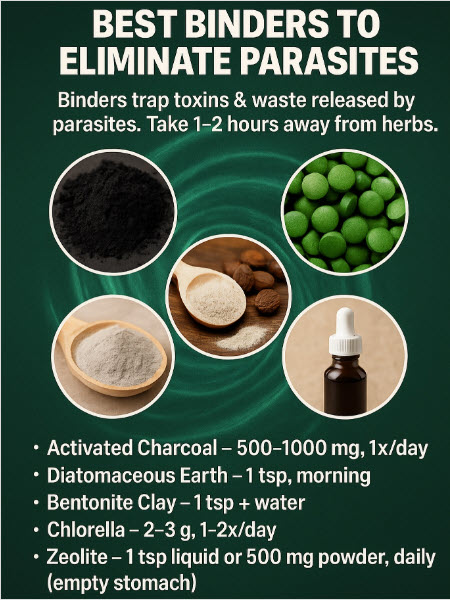
Binders: When deworming, use activated charcoal, bentonite clay, zeolite, chlorella, food-grade diatomaceous earth or some combination of these.
How Much Binder to Use Daily
Most people start a “detox” … but forget the most important step: BINDERS. If you release toxins, parasites, mold and heavy metals… but don’t bind them… they just recirculate in your body. That’s why so many people feel worse during a cleanse instead of better. Binders act like a magnet + sponge in your gut. They grab onto unwanted substances and escort them safely out through the colon.
Here’s what different binders do:
- Activated Charcoal – binds gases, chemicals, mold toxins, poisons
- Bentonite Clay – attracts heavy metals, pesticides, and radioactive particles
- Chlorella + Cilantro – helps mobilize + bind deeply stored metals
- Pectin + Psyllium – binds biofilm, waste in the colon
But the MVP of detox support? ZEOLITE.
Unlike most binders, clinoptilolite zeolite has a unique honeycomb cage structure and a permanent negative charge. This allows it to selectively trap positively charged toxins like:
- Lead
- Mercury
- Cadmium
- Ammonia
- Mold toxins
- Fluoride
- Radioactive particles
- Pesticides
- Herbicides
Zeolite locks the toxins in and removes them through elimination. That’s what makes it so powerful and gentle. Why I personally trust Zeolite daily:
- Doesn’t strip good minerals
- Doesn’t harm gut bacteria
- Supports liver + lymph detox
- Safe for long-term environmental protection
- Helps prevent re-absorption of toxins
Your detox is only as effective as what you REMOVE — not just what you release.
| Binder | Binds | Dosage |
|---|---|---|
| Pectin | Biofilms [†] Toxins | 5 – 10 grams 250 – 500 mg 2x daily |
| Bentonite Clay | Some heavy metals / mold / pesticides | 1 tsp in water 1 – 2 times per day |
| Zeolite | Heavy metals Mold / pesticides Ammonia Radiation | 1 tsp powder 1 – 2 times per day |
| Chlorella | Mobilizer [*] Heavy metals | 2 – 4 grams Divided doses |
| Cilantro | Mobilizer [*] Not a strong binder | 2 – 4 grams 250 – 500 mg 2 times a day |
| Activated Charcoal | Histamine & some heavy metals Mold & pesticides | 500 – 1000 mg 1 – 2 times a day |
| Psyllium Husk | Waste in colon & helps elimination | 1 Tbs in water 11 times daily |
| Fulvic Acid | Heavy metals Inorganic toxins | 1 – 20 drops as per bottle |
Sugar Versus Parasites
You do everything right, Clean food, filtered water, organic everything and yet you or your child still struggles with:
- Sensory overload that seems to come out of nowhere
- Tummy troubles that make no sense, no matter what avoid
- Chronic congestion, eczema, or mystery rashes
- Restless sleep, grinding teeth, or waking up exhausted
- Mood swings that could rival a soap opera
And the worst part? No one seems to have a real answer. You’re told, “It’s just normal childhood behavior,” or “It’s probably genetic,” as if that magically explains why your once-thriving child is now dealing with an avalanche of symptoms.
But what if the real culprit is something no one talks about?
Parasites. Yep, those little freeloaders aren’t just a third-world problem. They’re far more common than people think and they don’t discriminate. They steal nutrients, throw gut health into chaos, and weaken immunity. Kids are left with a list of symptoms that doctors will gaslight parents into thinking are “just part of growing up.”
And here’s where it gets even trickier. Most pharmaceutical dewormers only kill adult parasites. But those things are sneaky. They lay eggs that hatch later, kicking off an endless cycle of reinfestation. So while parents think they’re handling the problem, they’re really just pressing pause before it starts all over again.
That’s why real parasite cleansing means hitting every stage. Eggs, larvae, and adults. Ingredients like clove, wormwood, and black walnut don’t just wipe out the grown ones. They go after the eggs, shutting the whole operation down before it can start back up again.
Hatch, Anna. “Sugar VS Parasites.” 2025. Instagram. Accessed April 5. https://www.instagram.com/p/DHjjAJRC7iv/.
Foods Parasites Hate
Foods That Starve Parasites from Your Gut
PARASITES ARE WAY MORE COMMON THEN YOU THINK and they THRIVE on the sugar you consume!!
These foods are wonderful to include in your diet to discourage parasites from making your hide their new home however I chose to do a PROPER parasite cleanse at least twice a year to prevent UNDERTREATING! Certain foods only kill certain life cycles or forms of parasites I use an herbal blend that is designed to kill all types and life cycles.
- Garlic — Kills parasites naturally
- Pumpkin Seeds — Destroys parasite eggs
- Pineapple — Contains parasite-killing enzymes
- Papaya Seeds — Disrupts parasite growth
- Wormwood — Powerful anti-parasitic herb
- Lemon — Detoxifies and cleanses gut
- Ginger — Improves digestion, fights worms
- Cayenne Pepper — Burns parasite infections
- Raw Carrots — Scrapes parasites from intestines
- Raw Honey — Antimicrobial, starves parasites
- Cloves — Destroys parasite larvae
It is much easier to eradicate parasites early on rather than deal with a full blown infestation.
Parasite symptoms in humans, such as sleeping irregularities, skin irritation, mood changes, and muscle pain, can all be caused by the toxins released by the parasites into your bloodstream. These toxins could even cause anxiety, which tends to manifest itself in irregular sleeping patterns or teeth grinding.
And with parasites there will always be heavy metals in the body. They will continue to come back if you don’t deal with the heavy metals.
Other symptoms include:
- Rashes/eczema
- Food intolerances
- Sensory issues
- Itchy bum
- Sugar cravings
After a heavy metal detox and two rounds of deworming I passed a MASS of liver flukes. Shortly after my food intolerances, life long acne and intense sugar cravings disappeared.
Danica. “Foods That Starve Parasites from Your Gut.” 2025. Instagram. Accessed April 5. https://www.instagram.com/p/DHeLRkkxZ7y/.
Parasites Hate These 20 Foods
- Garlic — Loaded with allicin and ajoene, compounds that naturally kill parasites and other pathogens.
- Pumpkin Seed — Contain cucurbitacin, a compound that paralyzes parasites so they can’t cling to your gut wall.
- Pineapple — High in bromelain, a powerful enzyme that breaks down parasite membranes and supports digestion.
- Papaya Seeds — Contain carpaine, an alkaloid that has shown antiparasitic effects in animal studies.
- Wormwood — Potent antiparasitic herb used for centuries, especially effective when paired with clove and black walnut.
- Lemon — Stimulates liver detox and bile flow while alkalizing the gut to make it inhospitable to parasites.
- Ginger — Aids digestion, reduces inflammation, and helps create a hostile environment for worms.
- Cayenne Pepper — Increases heat and circulation, irritating parasites and disrupting their environment.
- Raw Carrots — Fiber-rich and coarse enough to physically help scrape parasites and biofilm from the intestinal lining.
- Raw Honey — Naturally antimicrobial and antifungal; helps inhibit parasite growth and supports the immune system.
- Cloves — Rich in eugenol. is lethal to parasite eggs and larvae—often the missing link in parasite cleanses.
- Black Walnut Hull — A classic antiparasitic herb that helps expel both adult parasites and their eggs.
- Oregano Oil — Packed with carvacrol and thymol, compounds that destroy parasite biofilms and bacterial overgrowth.
- Neem — An Ayurvedic antiparasitic and antifungal herb that also supports detox and immunity.
- Turmeric — Boosts bile production and has anti-inflammatory effects that support liver detox during a cleanse.
- Apple Cider Vinegar — Acidifies the gut and helps dislodge parasites while improving digestion and enzyme function.
- Thyme — Antimicrobial, antiparasitic, and particularly useful in targeting intestinal parasites.
- Coconut Oil — Contains lauric acid and caprylic acid, both of which damage parasite cell walls and yeast biofilms.
- Fennel Seeds — Soothing to the digestive tract while lightly expelling parasites and reducing gas and bloating.
- Barberry (Berberine) — Kills protozoa and pathogenic bacteria in the gut, improving microbiome balance and parasitic resistance.
Toxins
When parasites die in a human body, they can release various toxins that may trigger inflammatory responses and other symptoms. Here’s a summary of the types of toxins and their effects:
Types of Toxins Released
- Metabolic Waste Products:
- Metabolic waste products are byproducts of natural metabolic activity that the body cannot use and must eliminate, including nitrogenous wastes like urea, creatinine, and carbon dioxide. The elimination of metabolic waste products is crucial for maintaining the body’s chemical homeostasis (balance).
- Proteins and Enzymes: Parasites can release proteins and enzymes that can be toxic in high concentrations.
- Ammonia: A byproduct of protein metabolism, which can be harmful if accumulated.
- Endotoxins:
- Also known as lipopolysaccharides (LPS), are a type of bacterial virulence factor found in the outer membrane of Gram-negative bacteria. They are released upon bacterial cell death or lysis and can trigger a strong immune response, potentially leading to sepsis and septic shock.
- Many parasites possess cell wall components that can act as endotoxins, leading to an immune response. For example, certain protozoa have lipopolysaccharides that can trigger inflammation.
- Antigens:
- Antigens are molecules that trigger an immune response in the body. They are typically recognized as foreign by the immune system and induce the production of antibodies, which are proteins that specifically target and neutralize the antigens.
- Dead parasites can release antigens that provoke an immune response, potentially leading to allergic reactions or exacerbating autoimmune conditions.
- Secondary Metabolites:
- Secondary metabolites are organic compounds produced by living organisms that are not essential for their primary growth, development, or reproduction. Secondary metabolites play crucial roles in the survival and adaptation of organisms.
- Some parasites produce substances that can interfere with host metabolism or immune function, potentially leading to symptoms like fatigue or malaise.
Effects of Toxin Release
- Inflammation: The immune system reacts to the toxins, causing inflammation, which can lead to symptoms like fever, pain, and swelling.
- Allergic Reactions: Release of antigens may trigger allergic responses, such as skin rashes or respiratory issues.
- Tissue Damage: Inflammatory responses can result in tissue damage, particularly in areas where parasites were located.
The release of toxins from dying parasites can significantly impact the host’s health, often leading to various symptoms as the body responds to these foreign substances. Treatment may be necessary to manage symptoms and support recovery.
References
“What are traditional parasite cleanses?” 2025. Grok. Accessed April 5. https://grok.com/share/bGVnYWN5_a13583dd-5a9f-4fd8-b411-51598da034ca.
“What are some things to consider when doing a parasite cleanse?” 2025. Grok. Accessed April 5. https://grok.com/share/bGVnYWN5_999bf8c9-3cd0-49e7-93d4-06993eac33f5.
“What are some toxins that are released when parasites die?” 2025. Grok. Accessed April 6. https://poe.com/s/qopyArSwsvzpAtQsqGQU.
Cook-Coulson, James. 2023. “DO NOT BE REINFECTED BY PARASITES AFTER A PARASITE CLEANSE.” The Gut Health Hub. The Gut Health Hub. September 13. https://theguthealthhub.com/blogs/all-blogs/do-not-be-reinfected-by-parasites-after-a-parasite-cleanse.
“Parasite Cleanse: What Is It, How Does It Work, and More.” 2025. Healthline. Healthline Media. Accessed April 5. https://www.healthline.com/health/human-parasite-cleanse.
Notes
[†] A biofilm is a thick layer of prokaryotic [‡] organisms that have aggregated to form a colony. The colony attaches to a surface with a slime layer which aids in protecting the microorganisms. There are a number of reasons why biofilms are formed, all of which promote growth and survival or the microorganisms. Biofilms are found in almost all environments, and are the predominant form of microbial life in the natural environment. Although they are the leading cause of chronic infections, they are equally deeply connected to our ability to bioremediate waste and toxic materials.
[*] In this context, a mobilizer refers to liberating material stored in the body; more specifically, to move a substance from tissue stores into the bloodstream. A mobilizer may also refer to movements or actions that help the body release stored toxins and improve its overall health. Mobilizers are movements that create better extensibility in the body’s tissues, such as muscles, and can include activities like hip swings, hamstring stretches, and torso rotations. These movements are simple yet effective in enhancing flexibility and aiding in the detoxification process by promoting better blood flow and muscle relaxation.
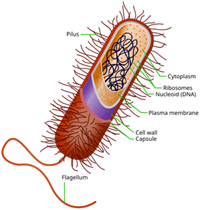
[‡] Prokaryotic refers to simple, single-celled organisms like bacteria and archaea that lack a nucleus and other membrane-bound organelles. These cells have a cell membrane, cytoplasm, ribosomes, and DNA, with the genetic material located in a region called the nucleoid, not inside a nucleus. Prokaryotes are smaller than eukaryotic cells and play vital roles in ecosystems and human health, such as nutrient cycling, aiding digestion, and producing food products.
Please consult your healthcare professional before starting any new treatment, medication, or health regimen to ensure it is safe and appropriate for your specific needs.
The featured image on this page is from the The Gut Health Hub website.
 Salubrious Sounds