Contents
- Protozoa (Single-celled organisms)
- Helminths (Parasitic worms)
- Ectoparasites (External parasites)
- Notes
- Signs of Parasites
- A Parasite-Cancer Relationship
- Parasites & Heavy Metals
- References
- Videos
Humans can be hosts to a variety of parasites, which are organisms that live on or in a host organism and derive nutrients or other benefits at the host’s expense. These parasites can be broadly categorized into three main groups: protozoa, helminths (worms), and ectoparasites.
Below is an overview of the different types of parasites that can inhabit humans, along with some common examples:
Protozoa (Single-celled organisms)
Protozoa are microscopic, single-celled parasites that can multiply within the human body, often causing significant illness. They are typically transmitted through contaminated food, water, or insect bites.
- Plasmodium spp. [‡] (Plasmodia)
- Causes: Malaria
- Transmission: Mosquito bites (Anopheles species)
- Affects: Red blood cells, leading to fever, chills, and organ damage if untreated.
- Giardia lamblia (Giardia duodenalis)
- Causes: Giardiasis
- Transmission: Contaminated water or food
- Affects: Intestines, causing diarrhea, abdominal pain, and malabsorption.
- Entamoeba histolytica
- Causes: Amebiasis
- Transmission: Contaminated food or water
- Affects: Intestines, potentially leading to dysentery or liver abscesses.
- Toxoplasma gondii
- Causes: Toxoplasmosis
- Transmission: Undercooked meat, cat feces, or congenital (mother to fetus)
- Affects: Brain, eyes, and other organs, often asymptomatic but dangerous in immunocompromised individuals or fetuses.
- Trypanosoma cruzi
- Causes: Chagas disease
- Transmission: Triatomine bugs (“kissing bugs”)
- Affects: Heart and digestive system, potentially leading to chronic illness.
- Leishmania spp. [‡]
- Causes: Leishmaniasis
- Transmission: Sandfly bites
- Affects: Skin (cutaneous), mucous membranes (mucocutaneous), or internal organs (visceral).
- Babesiosis
- Causes: The parasites multiply within red blood cells, eventually causing them to rupture, leading to hemolytic anemia
- Transmission: Tick bites, blood transfusion (less frequent)
- Affects: Destruction of red blood cells, and severe cases can lead to complications like organ failure, low blood pressure, and other issues. Symptoms can include fever, chills, fatigue, headache, muscle and joint pain, and nausea.
- Cryptosporidium
- Causes: Cryptosporidiosis causes watery diarrhea that can be severe.
- Transmission: Cryptosporidiosis is an illness you get from the parasite Cryptosporidium.
- Contaminated water: Drinking untreated or contaminated water, or swallowing water during recreational activities in pools, hot tubs, lakes, rivers, or water parks (this is the most frequent source of outbreaks).
- Contaminated food: Eating unwashed fruits or vegetables, or consuming unpasteurized milk, apple cider, or products made with unpasteurized ingredients.
- Person-to-person contact: Touching infected individuals, especially in childcare settings (e.g., changing diapers), or through sexual contact involving the anus or surrounding areas.
- Animal contact: Handling infected animals, such as calves, goats, or farm animals at petting zoos.
- Contaminated surfaces: Touching items like bathroom fixtures, changing tables, door handles, or toys that have been exposed to infected stool.
- Affects: Cryptosporidium primarily infects the gastrointestinal (GI) tract.
- In healthy individuals, it typically affects the small intestine, leading to symptoms like watery diarrhea, abdominal pain, cramping, nausea, vomiting, loss of appetite, and low-grade fever through mechanisms such as increased intestinal permeability, chloride secretion, malabsorption, and possible villous atrophy. Severe dehydration from diarrhea can impact overall body function, particularly in vulnerable groups like infants and pregnant people.
- In immunocompromised individuals, the infection can spread more widely, affecting the entire GI tract (pan-enteric involvement, including the ileo-colonic regions), biliary tract (e.g., bile ducts and gallbladder), pancreas, and even the respiratory tract. This can result in prolonged, severe disease and complications like growth issues in children.
- Entamoeba Coli
- Causes: Generally, E. coli is considered a commensal organism, meaning it doesn’t cause significant illness in most people.
- Transmission: The primary mode of transmission is through the ingestion of mature cysts of Entamoeba coli, which are shed in the feces of infected individuals. Contamination can occur through fecally-contaminated water sources, food washed with contaminated water, or food handled by infected individuals.
- Affects: Some studies suggest that E. coli may be associated with symptoms like diarrhea, abdominal pain, and fatigue, although it’s not definitively established.
- Entamoeba Gingivalis
- Causes: The parasite can invade and damage oral tissues, potentially contributing to gum disease and tooth loss.
- Transmission: Transmission occurs through close oral contact, primarily kissing. Sharing utensils, toothpicks, or other items contaminated with saliva can also spread the parasite.
- Affects: Primarily found in the mouth, particularly in gingival pockets around the teeth. E. gingivalis can contribute to oral inflammation and may be a factor in the development or progression of periodontitis.
- Malaria
- Causes: Malaria parasites primarily infect and multiply within red blood cells, leading to their destruction and causing anemia.
- Transmission: An infected mosquito bites a human, injecting sporozoites (the parasite’s infective form) into the bloodstream. When a mosquito bites an infected person, it can ingest the parasites, continuing the cycle.
- Affects: The parasite undergoes its initial development in the liver. The parasites travel to the liver, then infect red blood cells, causing symptoms. Malaria primarily affects the red blood cells, but it can also impact the liver, brain, kidneys, and other organs.
- Toxoplasmosis
- Causes: Toxoplasmosis can cause encephalitis (inflammation of the brain), potentially leading to seizures, confusion, and neurological damage, especially in individuals with weakened immune systems. It can cause ocular toxoplasmosis, leading to eye pain, blurred vision, and potentially vision loss or blindness. Inflammation of the lungs (pneumonitis) can occur, particularly in those with compromised immune systems. Myocarditis (inflammation of the heart muscle) can also occur, potentially leading to heart problems. Hepatitis (inflammation of the liver) is another possible complication. Swollen lymph nodes, particularly in the neck, are a common symptom.
- Transmission: Eating undercooked or raw meat (especially pork, lamb, and venison) containing the parasite’s cysts, or consuming contaminated unwashed fruits and vegetables. Drinking contaminated water. Contact with cat feces containing oocysts, either directly or through contaminated soil or sand.
- Affects: Brain, eyes, lungs, heart, liver, and lymph nodes. In severe cases, toxoplasmosis can affect other organs like the spleen and adrenal glands.
- Trichomonas
- Causes: primarily affects the genital area, causing symptoms like vaginal discharge, itching, and painful urination in women. In men, it can cause penile discharge, testicular pain, or be asymptomatic. Many people with trichomoniasis don’t experience any symptoms, but can still transmit the infection. Trichomoniasis can increase the risk of acquiring or transmitting other STIs, including HIV. Pregnant individuals with trichomoniasis may be at higher risk for premature birth.
- Transmission: The parasite is easily transmitted during vaginal intercourse, through anal sex, oral sex can also transmit the parasite. Skin-to-skin contact without ejaculation can also transmit the infection. It is not spread through casual contact like sharing food, kissing, or touching.
- Affects:
- Women:
- Vagina (vaginitis)
- Vulva
- Urethra
- Cervix
- Men:
- Penis
- Urethra
- Prostate gland (in some cases)
- Anus
- Women:
Helminths (Parasitic worms)
Helminths are multicellular worms that can live inside the human body. They don’t multiply within the host but can grow and cause damage over time. They are divided into three subgroups: nematodes (roundworms), cestodes (tapeworms), and trematodes (flukes).
Nematodes (Roundworms)
- Ascaris lumbricoides
- Causes: Ascariasis is caused by Ascaris lumbricoides, a large intestinal roundworm (nematode) and one of the most common parasitic infections in humans, particularly in areas with poor sanitation.
- Transmission: The infection begins when a person ingests the eggs of A. lumbricoides, which are shed in the feces of infected individuals. Risk factors include living in or traveling to tropical/subtropical regions with inadequate sanitation, poor hygiene practices, young age (children are more commonly affected due to hand-to-mouth behavior), and consuming contaminated food or water.
- Affects: Ascariasis affects multiple parts of the body due to the complex life cycle of Ascaris lumbricoides. After eggs are ingested, they hatch in the small intestine, and the larvae embark on a migratory path:
- Small intestine: The primary site of infection, where adult worms (which can grow up to 15–35 cm long) reside, feed, and reproduce. Heavy infections can cause abdominal pain, nausea, vomiting, diarrhea, or malabsorption, and in severe cases, intestinal obstruction or perforation.
- Lungs: Larvae penetrate the intestinal wall, enter the bloodstream, and migrate to the lungs (typically within 4–16 days after infection). This can cause respiratory symptoms like coughing, wheezing, shortness of breath, or Löffler’s syndrome (eosinophilic pneumonitis), particularly in heavy infections.
- Liver and bloodstream: During migration, larvae pass through the liver and circulatory system before reaching the lungs, though symptoms in these organs are less common.
- Biliary tract and other organs: In rare cases, adult worms may migrate to the bile ducts, gallbladder, or pancreas, causing blockages, cholangitis, or pancreatitis. Worms may also enter the appendix, leading to appendicitis.
- Trichinella spiralis
- Causes: Trichinosis
- Transmission: Undercooked meat (especially pork)
- Affects: Muscles, leading to pain and inflammation.
- Enterobius vermicularis (Pinworm)
- Causes: Enterobiasis
- Transmission: Ingestion or inhalation of eggs, often in children
- Affects: Intestines, causing anal itching.
- Strongyloides stercoralis
- Causes: Strongyloidiasis
- Transmission: Skin penetration from contaminated soil
- Affects: Intestines, lungs, and skin; can become severe in immunocompromised individuals.
- Filarial worms (e.g., Wuchereria bancrofti)
- Causes: Lymphatic filariasis (elephantiasis)
- Transmission: Mosquito bites
- Affects: Lymphatic system, leading to swelling and disfigurement.
- Capillaria
- Causes: Capillariasis is a parasitic infection caused by nematodes (roundworms) of the genus Capillaria. The primary species affecting humans are Capillaria hepatica and Capillaria philippinensis, with Capillaria aerophila being less common. The infection occurs when humans inadvertently ingest the eggs or larvae of these parasites, often through contaminated food, water, or soil.
- Poor sanitation and hygiene: Especially in areas with inadequate waste disposal or limited access to clean water.
- Consumption of raw or undercooked fish: Particularly for C. philippinensis, common in regions like the Philippines and Thailand where eating raw freshwater fish is a cultural practice.
- Exposure to contaminated soil: For C. hepatica, often linked to geophagia (eating soil) or contact with soil contaminated by infected animal feces, particularly in children or rural populations.
- Living in endemic areas: C. philippinensis is prevalent in the Philippines, Thailand, and parts of East/Southeast Asia, while C. hepatica has been reported globally except in Australia.
- Transmission: Capillariasis is primarily transmitted through the fecal-oral route, with distinct pathways for each species:
- Capillaria hepatica:
- Fecal-oral transmission: Eggs are shed in the feces of infected animals (e.g., rodents, monkeys, prairie dogs) and become infective in soil after about 30 days. Humans ingest these eggs through contaminated food, water, or soil (e.g., via pica or unwashed produce).
- Human-to-human transmission: Possible when human feces containing eggs contaminate soil, though this is less common.
- Environmental exposure: Eggs released from decomposing infected animals can contaminate soil, increasing the risk in rural or agricultural settings.
- Capillaria philippinensis:
- Foodborne transmission: Humans contract the infection by eating raw or undercooked freshwater fish containing C. philippinensis larvae. The larvae mature into adult worms in the human intestine.
- Autoinfection: Unlike C. hepatica, C. philippinensis can cause hyperinfection because some eggs hatch within the human intestine, producing larvae that reinvade the intestinal mucosa, leading to a massive worm burden.
- Fish-bird-human cycle: Fish-eating birds (e.g., herons, egrets) or mammals (e.g., monkeys) are primary hosts, shedding eggs into freshwater via feces. Fish become infected, and humans continue the cycle by consuming these fish. Direct human-to-human transmission does not occur, as fish are required as intermediate hosts.
- Capillaria hepatica:
- Affects: The body parts affected by capillariasis depend on the species of Capillaria involved:
- Capillaria hepatica:
- Liver: The primary site of infection, where adult worms reside and lay eggs, leading to hepatic capillariasis. This can cause hepatitis, liver inflammation, cirrhosis (scarring), jaundice, hepatomegaly (enlarged liver), ascites, and, in severe cases, anemia, fever, hypereosinophilia, or death.
- Symptoms are often absent with light infections but become severe with heavy worm burdens.
- Capillaria philippinensis:
- Small intestine: The primary site, where adult worms burrow into the mucosa, causing intestinal capillariasis. This leads to abdominal pain, chronic watery diarrhea, malabsorption, protein-losing enteropathy, weight loss, nausea, vomiting, edema, hypoalbuminemia, and, in untreated cases, emaciation or death.
- Systemic effects: Severe cases can lead to electrolyte imbalances (e.g., hypokalemia), muscle wasting, cardiac insufficiency, or cardiomyopathy due to malnutrition and protein loss.
- Capillaria aerophila:
- Lungs: Causes pulmonary capillariasis, a rare condition in humans, leading to respiratory symptoms like chronic cough, chest pain, respiratory distress, or hemoptysis (coughing up blood). It may mimic tuberculosis or other lung diseases.
- Capillaria hepatica:
- Causes: Capillariasis is a parasitic infection caused by nematodes (roundworms) of the genus Capillaria. The primary species affecting humans are Capillaria hepatica and Capillaria philippinensis, with Capillaria aerophila being less common. The infection occurs when humans inadvertently ingest the eggs or larvae of these parasites, often through contaminated food, water, or soil.
- Hookworm
- Causes: TBD
- Transmission: TBD
- Affects: TBD
- Roundworm
- Causes: TBD
- Transmission: TBD
- Affects: TBD
- Toxocara Canis
- Causes: TBD
- Transmission: TBD
- Affects: TBD
- Toxocara Cati
- Causes: TBD
- Transmission: TBD
- Affects: TBD
Cestodes (Tapeworms)
- Taenia saginata (Beef tapeworm)
- Transmission: Undercooked beef
- Affects: Intestines, often asymptomatic but can cause abdominal discomfort.
- Taenia solium (Pork tapeworm)
- Causes: Taeniasis or cysticercosis (if eggs are ingested)
- Transmission: Undercooked pork or poor hygiene
- Affects: Intestines (taeniasis) or tissues like the brain (cysticercosis).
- Echinococcus granulosus
- Causes: Hydatid disease
- Transmission: Contact with infected dogs or ingestion of eggs
- Affects: Liver, lungs, or other organs, forming cysts.
- Dipylidium
- Causes: TBD
- Transmission: TBD
- Affects: TBD
- Dipylidium Caninum
- Causes: TBD
- Transmission: TBD
- Affects: TBD
- Echnococcus
- Causes: TBD
- Transmission: TBD
- Affects: TBD
- Taenia Saginata
- Causes: TBD
- Transmission: TBD
- Affects: TBD
- Taenia Solium
- Causes: TBD
- Transmission: TBD
- Affects: TBD
- Tapeworm
- Causes: TBD
- Transmission: TBD
- Affects: TBD
Trematodes (Flukes)
- Schistosoma spp. [‡]
- Causes: Schistosomiasis (bilharzia)
- Transmission: Skin contact with contaminated freshwater
- Affects: Blood vessels, liver, bladder, or intestines.
- Fasciola hepatica (Liver fluke)
- Transmission: Contaminated water plants (e.g., watercress)
- Affects: Liver, causing inflammation and bile duct obstruction.
- Clonorchis sinensis (Chinese liver fluke)
- Transmission: Raw or undercooked freshwater fish
- Affects: Liver and bile ducts, potentially leading to cancer.
Ectoparasites (External parasites)
Ectoparasites live on the surface of the host, feeding on blood or skin. They can also transmit other pathogens.
- Pediculus humanus (Head and body lice)
- Transmission: Direct contact or shared items
- Affects: Skin, causing itching; can transmit diseases like typhus.
- Sarcoptes scabiei (Scabies mite)
- Transmission: Skin-to-skin contact
- Affects: Skin, burrowing in to cause intense itching and rashes.
- Fleas (e.g., Pulex irritans)
- Transmission: Contact with infested animals or environments
- Affects: Skin, causing bites; can transmit plague or typhus.
- Ticks (e.g., Ixodes spp.) [‡]
- Transmission: Attachment during outdoor activity
- Affects: Skin, feeding on blood; can transmit Lyme disease or Rocky Mountain spotted fever.
- Demodex mites (e.g., Demodex folliculorum)
- Transmission: Naturally present on human skin
- Affects: Hair follicles and sebaceous glands, usually harmless but can cause irritation in excess.
- Bed Bugs
Notes
- Parasitic infections vary widely in severity, from asymptomatic to life-threatening, depending on the parasite, the host’s immune system, and access to treatment.
- Many of these parasites are more common in tropical or developing regions due to sanitation, climate, or dietary factors, though some (like pinworms or lice) are widespread globally.
Signs of Parasites
If you have intestinal parasites it is a sign your immune system isn’t working right but they are often overlooked or undiagnosed in treating health problems. Parasites are prolific breeders that rob you of nutrients and produce toxic waste. Approximately 50 percent of people carry parasites. Up to 80 percent of people with chemical and metal toxicity and people with IBS and SIFO have parasites. There are over 100 different types of parasites that live in human hosts.
Parasitic infections can result in a range of health issues that can cause many uncomfortable and even painful symptoms. Unexplained digestive problems, itchiness, anemia, muscular and joint pain, and inability to feel satisfied after even a hearty meal are some of the commonly experienced signs you may have a parasite. Call your healthcare professional if your unusual signs indicate the presence of a parasite.
Common Signs of Parasite Invasions
Gut problems like these are usually the first sign:
- Bloating
- Smelly gas
- Stomach cramps
- Vomiting or nausea
- Loose stools
But parasites don’t just harm the digestion. They can also lead to:
- Bed wetting
- Teeth grinding
- Dark under eyes
- Restless sleep
- Stomach issues
- Speech delay
- Constant hunger
- Fatigue
- Unexplained weight loss
- Achy joints
- Low moods
- Worrying
- Rashes or hives
- Itchy spots around the bottom and private parts
- Frequent yeast flare-ups
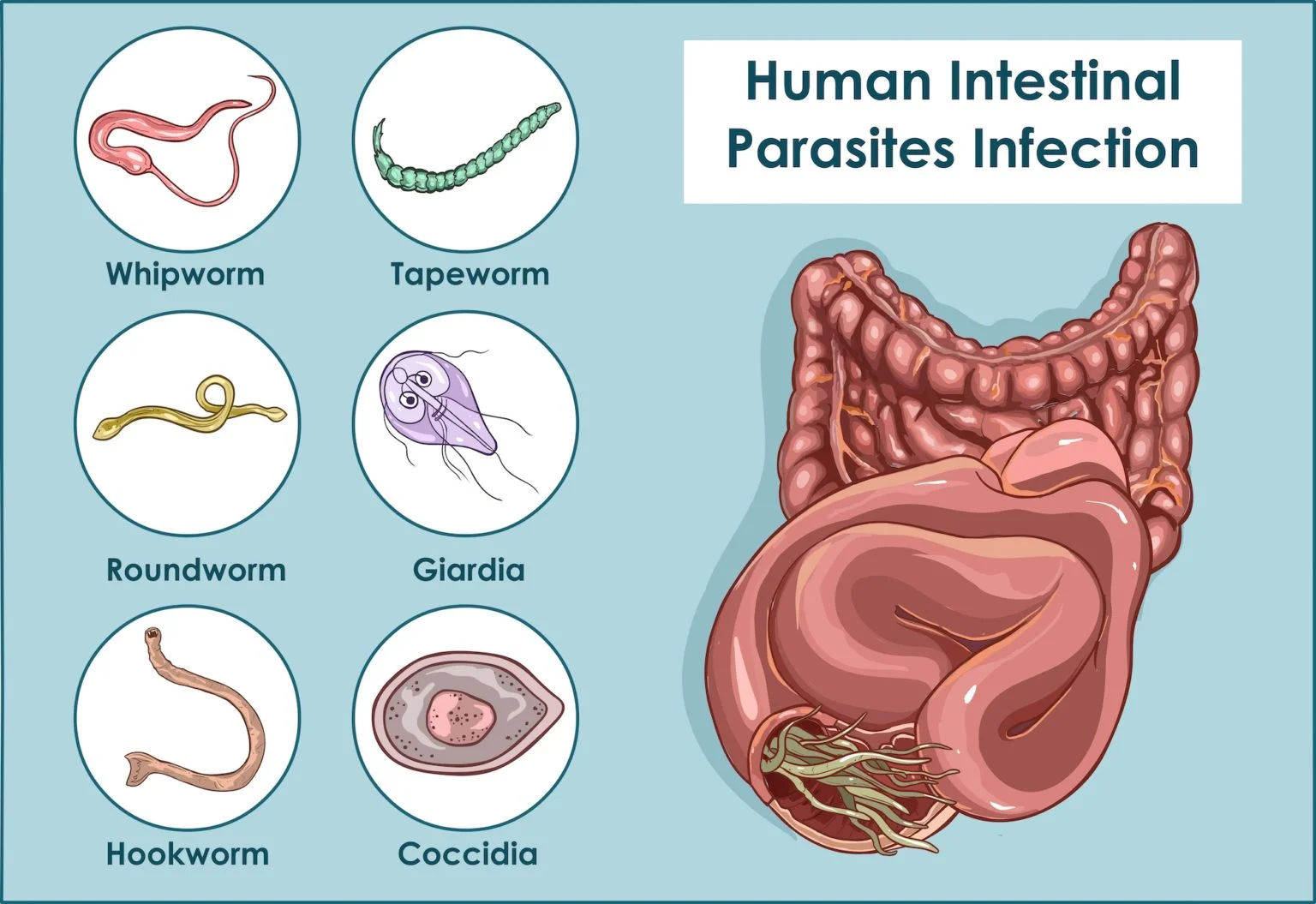
They fall into 4 categories:
- protozoans―microscopic single-celled organisms―e.g. giardia, cryptosporidium, toxoplasma gondii etc.
- roundworms & hookworms―e.g., hook worms, pin worms―prevalent in warmer climates
- tapeworms―common in beef, fish and pork. They are long, flat, ribbon-like creatures that attach their head to your intestinal wall and especially steal vitamin B12 and folic acid
- flukes―leaf-shaped flat worms that can inhabit your GI tract, blood, liver or lungs
Marie, Kaylee. “SIGNS OF PARASITES. 2025. Instagram. Accessed April 5. https://www.instagram.com/p/DH_RFtQONqj/.
“10 Signs You May Have A Parasite – NYC Gastroenterologist: Manhattan Gastroenterology.” 2025. NYC Gastroenterologist | Manhattan Gastroenterology. February 4. https://www.manhattangastroenterology.com/10-signs-you-may-have-a-parasite/.
“The Shocking Link Between Parasites And Leaky Gut.” 2025. Cleanse24. Accessed July 21. https://detoxify24.com/adv2.
A Parasite-Cancer Relationship
“A Parasite-Cancer Relationship.” 2025. OncoBites. April 10. https://oncobites.blog/2024/03/13/a-parasite-cancer-relationship/.
While some parasites can directly and definitively cause cancer, others can indirectly stimulate cancer development by triggering various mechanisms. In one possible mechanism, parasitic infection-induced chronic inflammation activates signaling pathways that could cause mutations and/or activate oncogenes. In another mechanism, some flukes secrete metabolites and other products that may induce oxidative stress, facilitating DNA damage and in turn, mutations. Mutations sometimes lead to cancer when they change proteins in ways that turn cancer cells cancerous. Lastly, as parasites grow, develop, and move, they can physically damage host tissues and trigger constantly active wound healing. This leads to increased cell transformation and proliferation, and with too much overproliferation, tumors can tend to form.
“The Link Between Parasitic and Cancer: An Academic Overview.” 2025. Body Tonic Med Spa. https://mybodytonic.com/parasites-cancer/.
Several mechanisms have been proposed to explain how parasitic infections may contribute to cancer development. These mechanisms include chronic inflammation, immune modulation [†], direct cellular damage, and the production of carcinogenic metabolites [#].
Parasites & Heavy Metals
Parasites might be stealing your nutrients and dumping waste into your system. Here’s how to shut them down.
STEP 1: PARASITE CLEANSE
Use a potent herbal blend that targets parasites at every stage, including eggs, larvae, and adults. These herbs have been used for centuries to eliminate gut invaders and restore healthy digestion.
Why you NEED to clear them out the right way.
- Parasites hoard heavy metals. Kill them without binding the metals? Those toxins flood back into your system.
- Die off can be brutal with headaches, fatigue, nausea, rashes. That’s your body struggling to mop up the mess.
- A strategic approach means no miserable die-off symptoms.
Don’t forget the binders. If you don’t clean up the junk, it just keeps recirculating.
STEP 2: HEAVY METAL DETOX
Did you know parasites use heavy metals to hide from your immune system? It’s like their invisibility cloak. Remove that and your body can finally eliminate them.
Heavy metals are no joke. They’re linked to:
- Brain damage
- Liver disease
- Neurological issues
- DNA mutations
My go-to detox? Zeolite. A powerful natural mineral that removes:
- Mercury, lead, aluminum
- Pesticides and mold
- Fluoride and radioactive toxins
- Carcinogens that mess with DNA
Zeolite works at the cellular level, which is crucial because parasites burrow deep. Once the metals are gone, they lose their hiding spots. Your immune system finally gains the upper hand.
Hatch, Anna. “HOW I KICK PARASITES (AND THEIR TOXIC WASTE) TO THE CURB.” 2025. Instagram. Accessed July 21. https://www.instagram.com/reel/DJWxuAYCQb5/.
References
“About Parasites.” 2024. Centers for Disease Control and Prevention. Centers for Disease Control and Prevention. November 14. https://www.cdc.gov/parasites/about/index.html.
There are three main classes of parasites that can cause disease in humans: protozoa, helminths, and ectoparasites.
Grok. “What are the different parasites that inhabit humans?” 2025. Accessed April 5. https://grok.com/share/bGVnYWN5_229f5bc7-f242-4436-b54f-478604f491c9.
Grok. “What should I know about the hatching cycle of parasites that infect humans?” 2025. Accessed April 5. https://grok.com/share/bGVnYWN5_9972c5f7-b1ec-447a-a060-3fe24be59222.
Some natural health practitioners say that parasite infections can be treated with a cleanse comprised of herbs and supplements.
Dr. Jockers. 2025. “What Type of Parasites Do You Have?” drjockers.com. March 26. https://drjockers.com/type-parasites/.
Intestinal parasites are abnormal and unwanted inhabitants of the gastrointestinal system that have the potential to cause damage to their host. They consume nutrients from the foods we are eating and they puncture holes in the intestinal membrane. Humans can play host to more than a hundred different types of parasites. Follow these strategies to protect your body from the damage done by parasites.
“Intestinal Parasites.” 2025. Mount Sinai Health System. Accessed April 5. https://www.mountsinai.org/health-library/condition/intestinal-parasites.
The seriousness and length of illness varies with the specific intestinal parasite. Complications happen more often in older people, and in people who already have serious illnesses, such as AIDS.
“What Are Intestinal Parasites?” 2025. Cleveland Clinic. March 19. https://my.clevelandclinic.org/health/diseases/intestinal-parasites.
Intestinal parasites include worms and single-celled organisms that live in your intestines. A parasite is an organism that lives off another organism (host). Parasites use the host’s body for nourishment and shelter. They rely on the host as a vehicle to spread to the next potential host(s), where they can continue multiplying and spreading. In return, intestinal parasites provide zero benefits. Instead, they can cause unpleasant symptoms and (in some cases) pose serious health risks.
“Parasitic Infection: Causes, Symptoms & Treatment.” 2025. Cleveland Clinic. March 19. https://my.clevelandclinic.org/health/diseases/24885-parasitic-infection.
Parasitic infections are diseases caused by organisms that live off of another living thing. They can cause fever, fatigue, intestinal symptoms, skin rashes or neurological symptoms. You can get them from contaminated food, water or surfaces, bug bites and eating undercooked meat.
“About Parasites.” 2025. Centers for Disease Control and Prevention. Centers for Disease Control and Prevention. Accessed April 5. https://www.cdc.gov/parasites/about/index.html.
A parasite is an organism that lives on or in a host organism and gets its food from or at the expense of its host. There are three main classes of parasites that can cause disease in humans: protozoa, helminths, and ectoparasites.
“Types of Human Parasite: Worms, Infections, and Causes.” 2025. Medical News Today. MediLexicon International. Accessed April 5. https://www.medicalnewstoday.com/articles/human-parasites.
Three types of parasites can cause disease in humans. They are protozoa, carried by mosquitos, helminths, such as roundworm, and ectoparasites, for instance lice and bed bugs.
“8 Common Parasitic Worms That May Lurk in Humans.” 2020. MakatiMed. July 21. https://www.makatimed.net.ph/blogs/8-common-parasitic-worms-that-may-lurk-in-humans/.
Did you know that parasitic worms could feed off humans? People can lightly joke about having worms in the human body, but it is possible to have them. Parasite transmission occurs and often happens during childhood due to higher exposure and improper hygiene. Other organisms can also be transmitted through water, soil, food, or person-to-person contact.
“MSK Library Guides: Infectious Diseases: Parasites.” 2025. Parasites – Infectious Diseases – MSK Library Guides at Memorial Sloan Kettering Cancer Center. Accessed April 5. https://libguides.mskcc.org/infectiousdiseases/Parasites.
A parasite is an organism that lives on or in a host organism and gets its food from or at the expense of its host. Parasitism is a kind of symbiosis, a close and persistent long-term biological interaction between a parasite and its host; but unlike commensalism and mutualism, the parasitic relationship harms the host, either feeding on it or, as in the case of intestinal parasites, consuming some of its food. Because parasites interact with other species, they can readily act as vectors of pathogens, causing disease. There are three main classes of parasites that can cause disease in humans: protozoa, helminths, and ectoparasites.
Videos
The statement “Parasites have killed more people than all the wars in the history of humankind” is a common phrase attributed to National Geographic, highlighting the significant impact of parasitic diseases on human populations. Here’s a more detailed explanation:
- The Impact of Parasites: Parasitic diseases, particularly those like malaria, have historically caused immense suffering and death worldwide.
- Malaria as a Case Study: Malaria, caused by a parasite transmitted through mosquito bites, is a prime example of a parasitic disease with a devastating global impact.
- National Geographic’s Role: The phrase is often attributed to National Geographic, which has extensively documented the impact of parasites and related health issues.
- The Significance of the Statement: The statement emphasizes the fact that parasitic diseases have killed more people than all wars combined, highlighting the profound impact of these often overlooked threats to human health.
- Examples of Parasitic Diseases: Besides malaria, other parasitic diseases like intestinal worms, leishmaniasis, and schistosomiasis, have also caused significant morbidity and mortality, particularly in developing countries.
- Prevalence of Parasites: It is estimated that a significant portion of the world’s population is infected with intestinal parasites, with some regions having rates as high as 50%.
[1] Harlan, Becky. 2014. “Musings: Marcus DeSieno Faces Tiny Monsters.” Photography. July 28. https://www.nationalgeographic.com/photography/article/musings-marcus-desieno-faces-tiny-monsters.
[2] “Malaria: What to Know about the World’s Deadliest Parasite.” 2025. Doctors Without Borders – USA. Accessed April 5. https://www.doctorswithoutborders.org/latest/what-know-about-worlds-deadliest-parasite.
[3] “What Are Intestinal Parasites?” 2025. Cleveland Clinic. March 19. https://my.clevelandclinic.org/health/diseases/intestinal-parasites.
[#] Carcinogenic metabolites are substances formed within the body from the metabolism of carcinogens, and these metabolites can damage DNA and lead to cancer development.
[†] Immune modulation refers to the process of altering the body’s immune response, either boosting or suppressing it, to achieve a desired effect. This can be done through various methods, including medications, therapies, or even by manipulating the immune system naturally through specific nutrients. The goal of immune modulation is often to target specific diseases or conditions where the immune system is either overly active (as in autoimmune diseases) or underactive (as in cancer).
[‡] “spp.” stands for “species”, and is used when referring to multiple, unspecified species within the parasite’s genus. For example, Plasmodium spp. would indicate several different species of the Plasmodium genus, but not a single, specific species.
Please consult your healthcare professional before starting any new treatment, medication, or health regimen to ensure it is safe and appropriate for your specific needs.
The featured image on this page is from the Dr. Jockers website.
 Salubrious Sounds